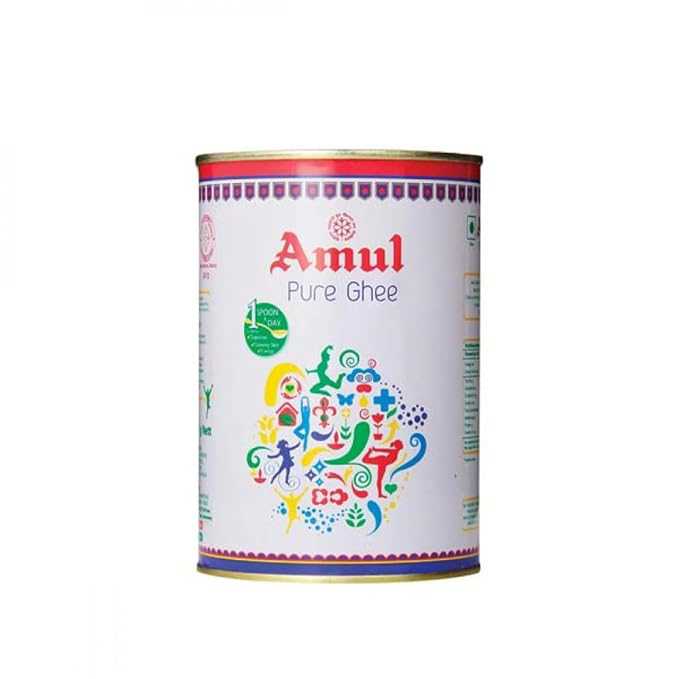
Shop Amul Ghee Online
A 1kg jar delivered from a local store — how to keep it, why it goes grainy, what it does at high heat, and what it comes to per spoonful.
AMUL GHEE 1KG
$17.00
about $0.24 a tablespoon · roughly 71 in the jar
Sold by Easy Grocery
Price and availability update live from the listing. The description above is the seller's own wording, reproduced as written, and is not endorsed or verified by DoorToShop — read the product page for the pack details and the best-before date.
Where to Keep It
A sealed jar wants a cool, dark cupboard away from the heat of the hob. Butter spoils through its water and its milk solids, and ghee is butter with both of those cooked off and strained out — so there is very little left for anything to grow in, and the handling of the jar matters far more than where it sits.
Keep it sealed, in a cupboard.
A cool, dark cupboard away from the hob is the right place for an unopened or opened jar. Ghee is made by cooking the water off butter and separating out the milk solids, and water and milk solids are what butter spoils through — with both gone, there is very little left for anything to grow in.
Use a dry spoon, every single time.
This matters more than everything else here put together. Water is what lets mould get a foothold, and the usual way water gets into a jar of ghee is a wet or previously used spoon. Dry, clean, straight in and out.
Keep crumbs and food out of the jar.
Anything organic that goes in and stays in — a crumb of roti, a fleck of onion off the spoon — is a starting point for spoilage in a way the ghee itself is not.
Go by the pack and the date on the listing.
Storage directions and the best-before date printed on the jar override anything general written here, and both are worth reading before you buy a kilogram of anything.
If you remember one thing: dry spoon, every time. Water is what lets mould get started in a jar that otherwise has nothing much to spoil. Almost every jar of ghee that goes off was introduced to water by a wet or already-used spoon.
What Ghee Actually Is
It is butter with two things taken out
Butter is roughly four-fifths fat, with the rest water and milk solids. Ghee is butter simmered until the water has boiled off and the solids have separated, then strained. What is left is essentially the fat on its own, which is why it is a liquid or a soft solid depending on the room rather than a spreadable block.
It is not quite clarified butter
Clarified butter is butter separated as soon as the solids drop out. Ghee is taken further: the solids are allowed to brown in the pan before straining, and that browning is where the nutty, slightly caramelised note comes from. Same starting point, different finish.
It takes more heat before it smokes
The milk solids in butter are what burn and blacken in a hot pan. Take them out and the fat that remains tolerates a noticeably higher temperature before it starts to smoke, which is a physical property of the fat rather than anything more than that.
Grainy is normal, not a fault
Ghee sets in crystals, and how coarse they are depends mostly on how quickly the jar cooled. A grainy, sandy-looking jar and a smooth one can be the same product from the same batch. Warming it gently and letting it set again will change the texture if it bothers you.
On lactose, the honest answer. Lactose sits in the milk solids that are separated out when ghee is made — but that describes the process, not what is in a particular jar. Ghee is a dairy product, how much of anything remains varies by manufacturer, and only the label speaks for the product in front of you.
If you have a dairy allergy or intolerance, read the pack and talk to your doctor rather than relying on a general description of how ghee is made — including this one.
Using It
- For tempering, get it properly hot before the spices go in. A spoonful in a small pan, heated until it shimmers, then cumin or mustard seed until they pop — poured over dal or rice at the end, that is the whole technique.
- A spoonful stirred into finished dal or khichdi at the table is a different job from cooking in it, and the reason a 1kg jar goes faster than people expect.
- It works for roasting and frying where you would otherwise reach for butter and worry about it catching.
- In baking, it behaves like a melted fat rather than a creamed one, so it suits recipes that call for oil or melted butter more readily than ones that start by beating butter and sugar.
- Brush it on roti or paratha straight off the pan. Traditional, and the single most persuasive argument for buying the larger jar.
What a 1kg Jar Comes To
Roughly 71 tablespoons in the jar. The spoonful is the unit recipes actually use, which is why the per-kilogram figure on its own tells you less than you would expect — worked out from the live listed price.
Where to Buy It
This jar is listed by Easy Grocery on DoorToShop, alongside the rest of their range — atta and rice, dals, whole and ground spices, cooking oils and tea. Our guide to the store covers what else they stock, and the wider Groceries category has other local stores you can add to the same order.
Check the price per kilo.
Divide the jar price by the weight and compare it with the smaller jars you would otherwise buy.
Make room in a cupboard.
Cool, dark, away from the hob. A kilogram jar is bigger than people picture.
Add to cart.
Order from Easy Grocery on DoorToShop. It is a multi-merchant marketplace, so you can add items from other local stores to the same order.
Check out.
Pay securely by card or net banking. There is no minimum order value.
Receive your order.
The store dispatches the next business day and courier delivery typically takes 1–3 business days. Track your order on the web or in the DoorToShop app.
Delivery is $5 as a base fee, with free delivery on orders above $69, and there is no minimum order value. Enter your postcode at checkout to confirm delivery coverage for your address, or read how DoorToShop works.
Frequently Asked Questions: Ghee
Where should I keep a jar of ghee?
In a cool, dark cupboard, away from the heat of the hob, with the lid on. Ghee is butter with the water and milk solids cooked off and strained out, and those are what butter spoils through, so there is very little left in the jar for anything to grow in. Follow the storage directions printed on the jar.
How do I stop a jar of ghee going off?
Use a dry, clean spoon every time and keep food out of the jar. Water is what lets mould take hold, and a wet or already-used spoon is how water gets in. Keep the lid on and the jar away from the heat of the hob.
What is the difference between ghee and butter?
Butter is about four-fifths fat, with the remainder water and milk solids. Ghee is butter simmered until the water has boiled away and the solids have separated out, then strained — essentially the fat on its own. That is why it is soft or liquid depending on the room rather than a firm block.
Is ghee the same as clarified butter?
Not quite. Clarified butter is separated as soon as the milk solids drop out. Ghee is cooked further so those solids brown in the pan before straining, and that browning is where its nutty note comes from.
Can you fry with ghee?
Yes. The milk solids in butter are what burn in a hot pan, and ghee has had them removed, so it takes a noticeably higher temperature before it starts to smoke. That is a physical property of the fat and nothing more.
Why has my ghee gone grainy?
Because it has crystallised, which is normal. How coarse the grain is depends mainly on how fast the jar cooled after it was made, so a sandy-looking jar and a smooth one can come from the same batch. Warming it gently and letting it set again will change the texture if you would rather it were smooth.
Does ghee contain lactose?
Ghee is made by separating the water and milk solids out of butter, and lactose sits in the milk solids. That is a description of how ghee is made, not an allergen statement: ghee is a dairy product, how much of anything remains varies by manufacturer and process, and only the label can tell you what is in a particular jar. If you have a dairy allergy or intolerance, read the pack and talk to your doctor rather than relying on a general description.
How many tablespoons are in a 1kg jar?
Around 71, taking a level tablespoon as roughly 14g. That is what makes the arithmetic on a large jar interesting — the unit most recipes use is the spoonful, not the kilogram.
What does a 1kg jar work out at?
At the current price of $17.00, that is $17.00 per kilogram, or about $0.24 a tablespoon. Prices move, so divide the price on the product page yourself if you want to check it.
How fast is delivery?
Orders are dispatched by the store the next business day and typically arrive within 1 to 3 business days by courier. Enter your postcode at checkout to confirm delivery coverage for your address.
How much does delivery cost?
The base delivery fee is $5 NZD, with free delivery on orders above $69 — the exact amount is confirmed at checkout. There is no minimum order value.
What if the jar arrives damaged?
Photograph it before opening anything further and contact the store the same day. Returns are handled by the store that sold the item, and nothing in a store's policy limits your rights under the Consumer Guarantees Act 1993.