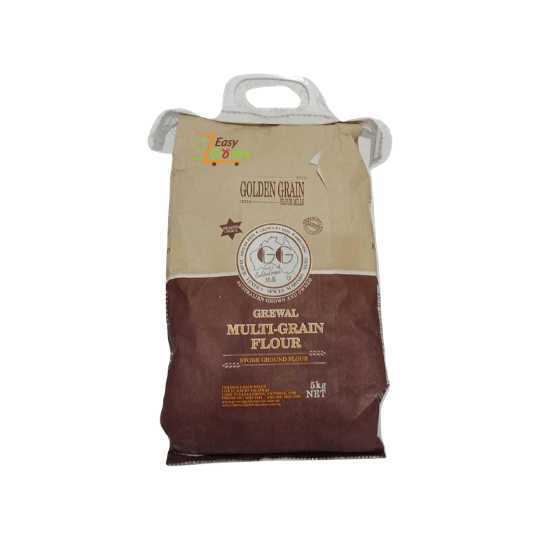
Shop Multigrain Atta Online
Grewal Multigrain Atta, 5kg — whole wheat atta blended with other grains, milled for everyday roti, chapati and paratha. Sold by a local Auckland store and couriered to your door.
GREWAL MULTIGRAIN ATTA 5KG
$19.50
$3.90 per kg · about 111 rotis a bag
Sold by Easy Grocery
Price and availability update live from the listing. The description above is the seller's own wording, reproduced as written. It is not endorsed or verified by DoorToShop, and any statement in it about nutrition or health is the manufacturer's or the seller's, not ours — the nutrition information panel, ingredient list and allergen statement on the packaging are what count.
What Is on the Flour Shelf
Five bags sit side by side in an Indian grocery and only two of them will make a roti. What each one actually is:
Atta
Wholemeal wheat flour milled for flatbread — the whole grain, bran and germ included, ground fine. It absorbs a lot of water, comes together into a soft dough without kneading it to death, and is what roti, chapati and paratha are made from. The default bag in an Indian kitchen.
Multigrain atta
Wheat atta blended with other grains and pulses. Which ones, and in what proportion, is entirely up to the manufacturer — the blend is the product, and it is printed on the pack rather than implied by the word. Expect it to behave a little differently from plain atta in the bowl, because the other grains hold water differently and bring less gluten with them.
Chakki atta
Not a different grain — a description of the milling. Chakki refers to stone grinding, which works the grain more slowly and warmer than a roller mill. Plenty of atta on the shelf is labelled this way; it is a processing distinction, not a nutritional one.
Maida
Refined white wheat flour with the bran and germ removed. Soft, pale and stretchy, and what naan, bhatura, samosa pastry and most Indian bakery goods are made from. It is not a substitute for atta in roti and the result is immediately obvious if you try.
Besan
Not wheat at all — ground chana dal. It goes into pakora batter, kadhi, chilla and a long list of sweets. Sitting in the same aisle and sold in similar bags, which is the only reason it gets confused with the others.
Multigrain does not mean wheat-free. This is a wheat flour with other grains blended into it, so it contains gluten. Worth saying plainly, because the word reads to some shoppers as though the wheat has been taken out. If you are avoiding wheat or gluten, the ingredient and allergen statement on the pack is what you need, and this is not the flour.
The blend is on the pack, not in the listing. For a multigrain flour, which grains are in it and in what order is the main thing separating one bag from another. This listing does not publish that list, so read the packaging rather than assuming a particular mix.
Making the Dough
If you are coming from plain atta, two things change and everything else stays the same: it takes more water, and it wants a rest. Most complaints about blended flours trace back to one of those two:
Start with less water than you think, then keep going.
Multigrain blends usually drink more water than plain atta, because the bran and the added grains take time to absorb. Add water in stages rather than all at once — roughly three parts flour to two parts water by volume is a reasonable place to begin, then adjust.
Mix it, then leave it alone for twenty minutes.
This is the step people skip and then blame the flour for. A rest lets the bran soften and the whole mix hydrate evenly. A dough that felt stiff and shaggy at the start will be noticeably softer and more cooperative afterwards.
Knead briefly, not aggressively.
There is less gluten at work here than in a plain wheat dough, so long kneading gains you little. A few minutes to bring it smooth is enough, and a light film of oil or ghee on your palms keeps it from sticking.
Roll a little thicker than you would plain atta.
A blended dough tears more readily at the edges than a straight wheat one. Slightly thicker discs hold together, and a light dusting of dry flour on the board rather than a heavy one keeps the surface from drying out.
Cook it hot and do not crowd the pan.
A properly hot tawa is what makes a roti puff. Give each one its own space, turn it as soon as the surface changes colour, and press the edges gently with a cloth to encourage the steam pocket.
Keep the cooked ones covered.
Straight into a cloth-lined container or a folded tea towel. Steam trapped between them is what keeps them soft, and roti left uncovered on a plate goes leathery within minutes.
General technique for blended atta, not instructions for a particular product. Where the packaging gives its own directions, follow those.
Storing Five Kilos of Flour
A 5kg bag is a few weeks of roti for most households, which is long enough for storage to matter:
- Get it out of the paper or woven sack. That is transport packaging, not storage — it breathes, it tears, and it is no barrier at all to pantry insects. Decant into sealed airtight containers as soon as it arrives.
- Cool, dry and out of the light. A cupboard away from the stove and the kettle. Warmth and steam are what turn a good bag of flour into a disappointing one.
- Wholemeal keeps less well than white flour, and that is a matter of composition rather than quality. The germ is still in it, the germ contains oil, and oil eventually goes stale. Buy the size you will get through, not the biggest one on the shelf.
- Trust your nose. Flour that smells sharp, musty or faintly like old paint has turned, and no amount of kneading will fix the taste. Fresh atta smells mildly sweet and of nothing much else.
- If you are slow through a bag, the freezer works. Flour freezes without any special treatment, and bringing a container back to room temperature before opening it stops condensation forming inside.
- Check for pantry weevils when you decant, particularly in summer. Sealed containers are the whole defence — once they are into one container they do not spread to the others.
What Five Kilos Comes To
Taking a medium roti as about 45g of flour — nobody weighs their dough, so treat these as ballpark. All of it is worked out from the live listed price, so it moves when the price does.
Atta is also stocked in 10kg and 20kg bags, which are usually cheaper per kilogram. Whether that is better value for you depends on how fast you get through it: divide price by weight for each size, then be honest about how much roti your household actually eats in a month. A bag that goes stale before you finish it is not a saving.
Where to Buy It
This bag is listed by Easy Grocery on DoorToShop, alongside the rest of their range — plain atta in 10kg and 20kg, basmati and jasmine rice, dals, whole and ground spices, ghee and cooking oils, tea and snacks. Our guide to the store covers what else they stock, and the wider Groceries category has other local stores you can add to the same order.
Check the size against how fast you bake.
This is a 5kg bag. Atta is also stocked in 10kg and 20kg, which are usually cheaper per kilogram — but only if you get through them before the flour goes stale.
Read the pack for the blend.
For a multigrain flour, which grains are in it and in what order is the thing worth knowing, and it is on the packaging rather than in the listing.
Add to cart.
Order from Easy Grocery on DoorToShop. It is a multi-merchant marketplace, so you can add items from other local stores to the same order.
Check out.
Pay securely by card or net banking. There is no minimum order value.
Receive your order.
The store dispatches the next business day and courier delivery typically takes 1–3 business days. Track your order on the web or in the DoorToShop app.
Delivery is $5 as a base fee, with free delivery on orders above $69, and there is no minimum order value. Enter your postcode at checkout to confirm delivery coverage for your address, or read how DoorToShop works.
Frequently Asked Questions: Multigrain Atta
What is multigrain atta?
Wheat atta blended with other grains, and in many blends some pulses as well. The word describes the approach rather than a fixed recipe: which grains go in, and in what proportion, is decided by the manufacturer and printed on the pack. Two bags both labelled multigrain can be quite different from each other.
What grains are in this one?
The blend is printed on the packaging. This listing does not publish the grain list, so read the pack — for a multigrain flour that list is the main thing separating one bag from another, and it is not something to guess at.
Does multigrain atta contain gluten?
Yes. It is built on wheat flour, and wheat contains gluten — "multigrain" means other grains have been added, not that wheat has been taken away. If you are avoiding gluten or wheat for any reason, this is not the flour, and the ingredient and allergen statement on the pack is the one that counts.
How is it different from plain atta to work with?
It takes more water and it wants a longer rest. The bran and the added grains absorb liquid more slowly than plain wheat flour, so a dough that feels stiff when you mix it will be much softer twenty minutes later. There is also less gluten at work, so knead briefly rather than at length, and roll slightly thicker — a blended dough tears at the edges more readily than a straight wheat one.
Why are my rotis coming out hard?
Usually one of three things. The dough was too dry — multigrain blends drink more water than people expect. It did not rest, so the bran never hydrated. Or the pan was not hot enough, so the roti dried out slowly instead of puffing quickly. Covering them straight off the pan matters too; steam is what keeps them soft, and an uncovered roti goes leathery in minutes.
Can I use it in place of plain atta in any recipe?
For roti, chapati and paratha, yes, allowing for the water and the rest. For anything that needs stretch and lift — naan, bhatura, puri — the result will be denser than you are used to, because there is less gluten in the mix. Many people split the difference and blend it half and half with plain atta while they get used to it.
Is it the same as chakki atta?
No, and the two words answer different questions. Multigrain describes what is in the bag; chakki describes how it was milled, referring to stone grinding rather than roller milling. A flour can be both, one, or neither.
What is the difference between atta and maida?
Atta is wholemeal — the whole wheat grain, bran and germ included. Maida is refined white wheat flour with the bran and germ removed, which is why it is pale, soft and stretchy. Maida goes into naan, bhatura and pastry; it does not make a roti anyone would recognise.
How should I store a 5kg bag?
Decant it into sealed airtight containers straight away — the sack is transport packaging and no barrier to pantry insects — and keep it somewhere cool, dry and dark, away from the stove and the kettle. Wholemeal flours keep less well than white ones because the germ is still in them and the germ contains oil, so buy the size you will actually get through. The freezer is a reasonable option if you bake slowly; let the container come back to room temperature before opening it so condensation does not form inside.
How do I know if flour has gone off?
Smell it. Fresh atta smells mildly sweet and of very little else. Flour that has turned smells sharp, musty or faintly like old paint, and the taste carries through into everything you make with it.
Is the bigger bag better value?
Per kilogram, usually — 10kg and 20kg bags are stocked alongside this one. Whether it is better value for you is a different question, because a bag that goes stale before you finish it is not a saving. Divide price by weight for each size, then be honest about how much roti your household actually eats.
How many rotis will a 5kg bag make?
Taking a medium roti as about 45g of flour, roughly 111 of them. At the current price of $19.50 that is about 17.6 cents each, and $3.90 a kilogram. Rough figures — nobody weighs their dough.
How fast is delivery?
Orders are dispatched by the store the next business day and typically arrive within 1 to 3 business days by courier. Enter your address at checkout to confirm delivery coverage for your address.
How much does delivery cost?
The base delivery fee is $5 NZD, with free delivery on orders above $69 in the Auckland region — the exact amount is confirmed at checkout. There is no minimum order value.
What if the bag arrives split?
Photograph it as it arrived and contact the store the same day. Returns are handled by the store that sold the item, and nothing in a store's policy limits your rights under the Consumer Guarantees Act 1993.