
Shop Fafda Online

A 350g pack delivered from a local store — what fafda is, how it differs from ganthiya and sev, what it is eaten with, and how to keep an opened bag from going soft.

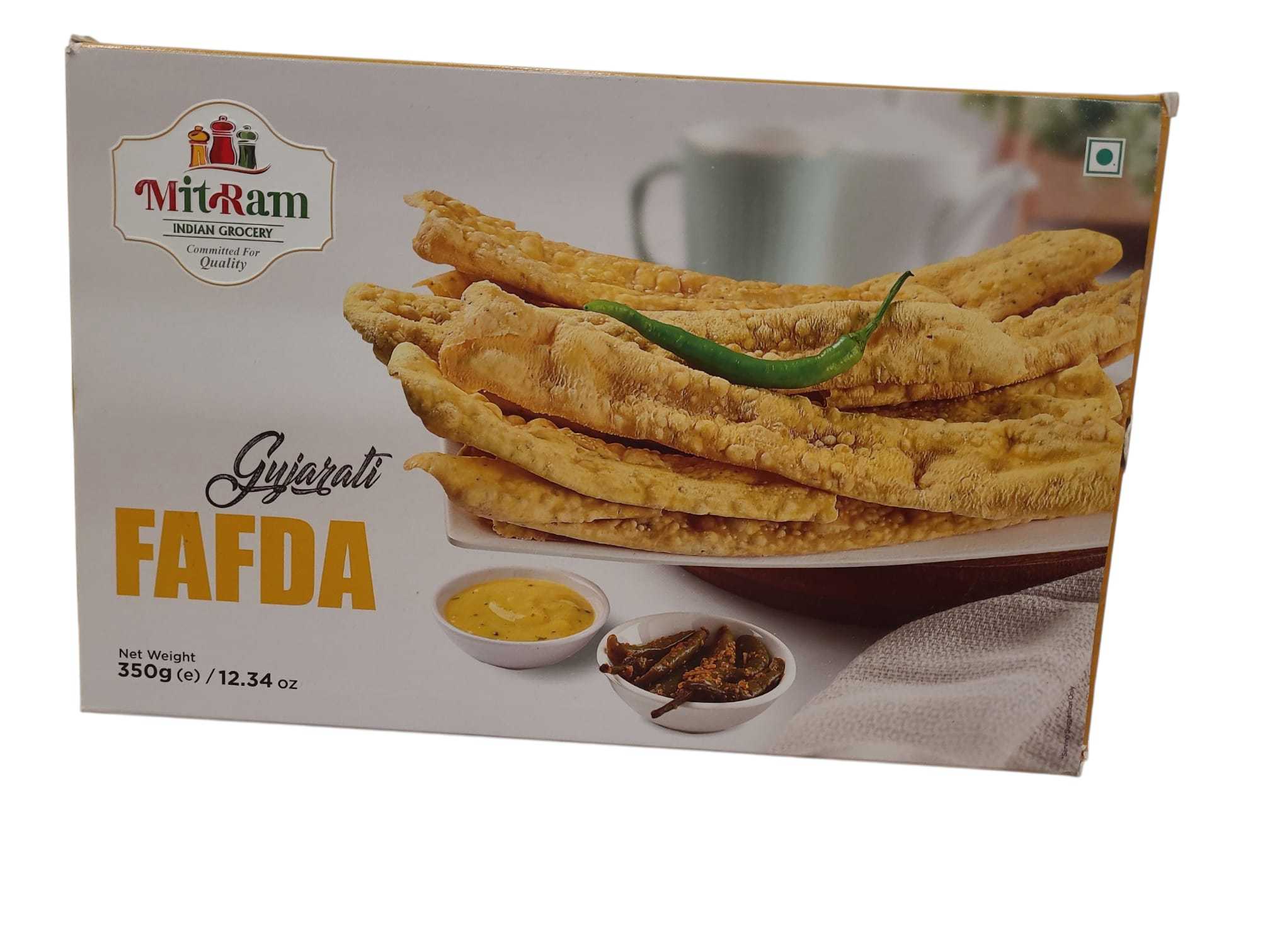
 FAFDA 350GM — sold by Easy Grocery on DoorToShop

FAFDA 350GM

$7.50 $8.50 Save 12%

about $0.62 per 30g serve · $2.14 per 100g

Sold by Easy Grocery

Crispy traditional Gujarati snack made from gram flour. Perfect for tea-time, breakfast, or festive occasions.
View product →

Price and availability update live from the listing. The description above is the seller's own wording, reproduced as written, and is not endorsed or verified by DoorToShop — read the pack for the ingredient list, allergen information and the best-before date.

Fafda, Ganthiya or Sev

Half the shelf is made from the same gram flour dough and none of it is interchangeable. What separates them is the shape and how it was formed:

Fafda

Long, flat, slightly irregular strips, rolled or pressed thin by hand from a gram flour dough and fried. Wider and softer-textured than anything else in this family — it snaps, but it has some chew to it rather than shattering. Usually seasoned with carom seed, which is the flavour people recognise before they can name it.

Ganthiya

The closest relative, and the one it gets confused with. Ganthiya is extruded through a press rather than rolled, so it comes out in shorter, thicker, more uniform pieces — a rounder bite where fafda is a flat one. Same dough family, different shape and a different mouthfeel.

Sev

Fine noodles of the same gram flour dough, pushed through a much smaller die. Sev is a topping and a mixer rather than something eaten on its own by the handful — it goes over chaat, into bhel, or through a dry namkeen mix.

Papdi

Small flat discs, made from a wheat-flour dough rather than gram flour and rolled thin before frying. Firmer and more cracker-like. It is the base of papdi chaat, where it has to hold up under chutney and yoghurt without going soft.

Khakhra

Not fried at all. A thin wheat cracker roasted on a griddle and pressed flat, which is why it is dry and brittle rather than rich. Sold alongside the fried snacks and often bought for the same moment, but a completely different thing to eat.

General descriptions of the snacks, not statements about any particular pack. Recipes and seasoning vary between makers and regions.

What It Is Eaten With

Nothing here needs cooking — fafda comes out of the bag ready. What changes is what you put next to it, and the answer in Gujarat is famously specific:

  • Jalebi. The pairing that people travel for. Fafda with hot jalebi is a Gujarati breakfast fixture — savoury, salty and sharp against sweet and syrupy — and it is what most of a pack gets eaten with.
  • Sambharo. A warm, quickly cooked relish of shredded raw papaya or cabbage and carrot, tempered with mustard seed, turmeric and green chilli. It is the classic accompaniment and it cuts the richness of anything fried.
  • Fried green chillies. Slit, briefly fried and salted. Served alongside rather than eaten by the handful, for anyone who wants the heat.
  • A thin chutney or kadhi. A coriander chutney, or a thin besan kadhi to dip into. Regional habit more than rule — households differ, and plenty of people eat it plain.
  • Tea. The everyday version, and the reason a 350g pack disappears faster than you expect. No accompaniment, no occasion, just something to eat with a cup of chai.

The Dussehra habit. Fafda and jalebi on Dussehra morning is one of the most durable food customs in Gujarat — sweet shops sell it by the sack that day and queues form early. It is a custom people keep rather than a rule anyone is bound by, and the rest of the year it is an ordinary Sunday-breakfast and tea-time snack.

Keeping an Opened Pack Crisp

350g is more than one sitting, so most of this bag is going to sit around for a few days. Fried gram flour softens by picking up moisture out of the air, and everything below is about denying it that:

1

Get it out of the opened bag.

A folded-over bag is not a seal. Fried gram flour goes soft because it picks up moisture from the air, and Auckland's air has plenty of it. Tip the pack into an airtight container as soon as you open it.

2

Fill the container, or use a smaller one.

Air in the container is moisture in the container. A half-empty jar softens its contents faster than a full one, so step down a size as the pack goes rather than leaving one big jar half full.

3

Keep it out of the cupboard above the stove.

Steam and warmth are the two things working against you. A cool, dry cupboard away from the hob and the kettle is worth more than any container.

4

Do not refrigerate it.

A fridge is a damp environment, and a cold container brought out into a warm kitchen collects condensation on everything inside it. Room temperature, sealed and dry, is the right answer for a fried snack.

5

Bring back a soft pack with dry heat.

If it has already gone limp, a few minutes spread out in a low oven or a dry pan over a low flame drives the moisture off and much of the snap comes back. Let it cool completely before it goes back in the container, or it will steam itself soft again on the way in.

On gluten, and why this page will not answer it for you. Fafda is traditionally made from gram flour rather than wheat flour. That describes the dish, not the pack in front of you: commercial asafoetida is very often blended with wheat flour, makers add different things, and shared frying and packing equipment is a separate question again. If you are avoiding gluten or any other allergen, the ingredient and allergen statement on the packaging is the one that counts — read it, and ask the manufacturer if anything is unclear.

General handling advice for fried snacks. Where the packaging gives its own storage directions and a best-before date, follow those.

What 350 Grams Comes To

$7.50 Reduced from $8.50
$2.14 Per 100g
$0.62 Per 30g serve
12 Serves in the pack

Taking a handful as roughly 30g, a 350g bag is about 12 serves — a pack to share with tea over a week rather than one sitting. That works out at $21.43 a kilogram. All of it is calculated from the live listed price, so it moves when the price does.

Where to Buy It

This pack is listed by Easy Grocery on DoorToShop, alongside the rest of their range — atta and rice, dals, whole and ground spices, ghee and cooking oils, tea, and the rest of the namkeen shelf including sev, khakhra and masala chips. Our guide to the store covers what else they stock, and the wider Groceries category has other local stores you can add to the same order.

1

Check the pack size against how fast you eat it.

This is a 350g bag — around 12 handful-sized serves. It is a share-with-tea pack rather than a single sitting.

2

Read the pack details on the listing.

The product page carries the weight, the barcode and the best-before date as the store has entered them. Ingredients and allergen information are on the packaging itself.

3

Add to cart.

Order from Easy Grocery on DoorToShop. It is a multi-merchant marketplace, so you can add items from other local stores to the same order.

4

Check out.

Pay securely by card or net banking. There is no minimum order value.

5

Receive your order.

The store dispatches the next business day and courier delivery typically takes 1–3 business days. Track your order on the web or in the DoorToShop app.

Delivery is $5 as a base fee, with free delivery on orders above $69, and there is no minimum order value. Enter your postcode at checkout to confirm delivery coverage for your address, or read how DoorToShop works.

Frequently Asked Questions: Fafda

What is fafda?

A Gujarati fried snack made from a gram flour dough, rolled or pressed into long flat strips and deep-fried. It is eaten by hand, usually with tea or as part of a breakfast plate, and it is one of the most recognisable items in the Gujarati farsan — savoury snack — tradition.

What is the difference between fafda and ganthiya?

Shape and how they are formed. Fafda is rolled or pressed flat into long, wide, slightly irregular strips; ganthiya is extruded through a press into shorter, thicker, more uniform pieces. The dough family is the same, so they taste closely related, but fafda is a flat bite with some chew and ganthiya is a rounder, denser one. Shops usually stock both.

Is fafda the same as sev?

No. Sev is the same sort of gram flour dough pushed through a very fine die into thin noodles, used as a topping for chaat and bhel or mixed through a dry namkeen. Fafda is eaten on its own by the piece.

What do you eat fafda with?

Most traditionally with jalebi, which is the pairing Gujarat is known for, and with sambharo — a warm relish of shredded raw papaya or cabbage and carrot, tempered with mustard seed and turmeric. Fried green chillies and a coriander chutney or thin kadhi often come alongside. Day to day, most of a pack gets eaten plain with tea.

Why is fafda eaten at Dussehra?

It is a long-standing custom in Gujarat rather than a rule: fafda and jalebi are what a great many households and sweet shops serve on Dussehra morning, and shops sell it in enormous quantity that day. Outside the festival it is an ordinary Sunday-breakfast and tea-time snack.

Does fafda need cooking?

No. It is fried and ready to eat straight from the pack. The only heat it might want is a few minutes in a low oven or a dry pan if an opened pack has gone soft.

How do you keep an opened pack crisp?

Move it out of the bag into an airtight container the day you open it, use a container it roughly fills rather than a large half-empty one, and keep it somewhere cool and dry away from the stove and kettle. Do not refrigerate it — a fridge is damp, and a cold container collects condensation when it comes back into a warm kitchen. A pack that has already softened can be spread out in a low oven or a dry pan for a few minutes and cooled completely before it is sealed again.

Is fafda gluten free?

Do not assume so. Fafda is traditionally made from gram flour rather than wheat flour, but that describes the recipe, not this pack: commercial asafoetida is very often blended with wheat flour, recipes and additives differ between manufacturers, and shared frying and packing equipment is a separate question again. If you are avoiding gluten, read the ingredient and allergen statement on the packaging and check with the manufacturer if anything is unclear — that statement is theirs to make, not ours.

Is fafda vegetarian or vegan?

The traditional recipe is a flour, salt, seasoning and frying oil, but what is in any particular pack is a question for its ingredient list. Read the label rather than relying on a general description of the dish.

What is the best-before date on this pack?

The store enters it on the product listing and it is printed on the packaging. It changes as stock rotates, so check the current date on the product page rather than any figure quoted elsewhere.

What does the pack work out at per serve?

At the current price of $7.50, a 350g pack is about $0.62 for a 30g serve, or $2.14 per 100g. Prices move, so check it against the product page.

How fast is delivery?

Orders are dispatched by the store the next business day and typically arrive within 1 to 3 business days by courier. Enter your postcode at checkout to confirm delivery coverage for your address.

How much does delivery cost?

The base delivery fee is $5 NZD, with free delivery on orders above $69 — the exact amount is confirmed at checkout. There is no minimum order value.

What if the pack arrives crushed or open?

Photograph it as it arrived and contact the store the same day. Returns are handled by the store that sold the item, and nothing in a store's policy limits your rights under the Consumer Guarantees Act 1993.

Voice Shopping

Ready to help

Hi there! 👋

I'm your voice shopping assistant. You can:

  • Search for products
  • Add items to cart
  • Check out
  • Track orders

I'm listening continuously! Just speak your command anytime.

Click to speak