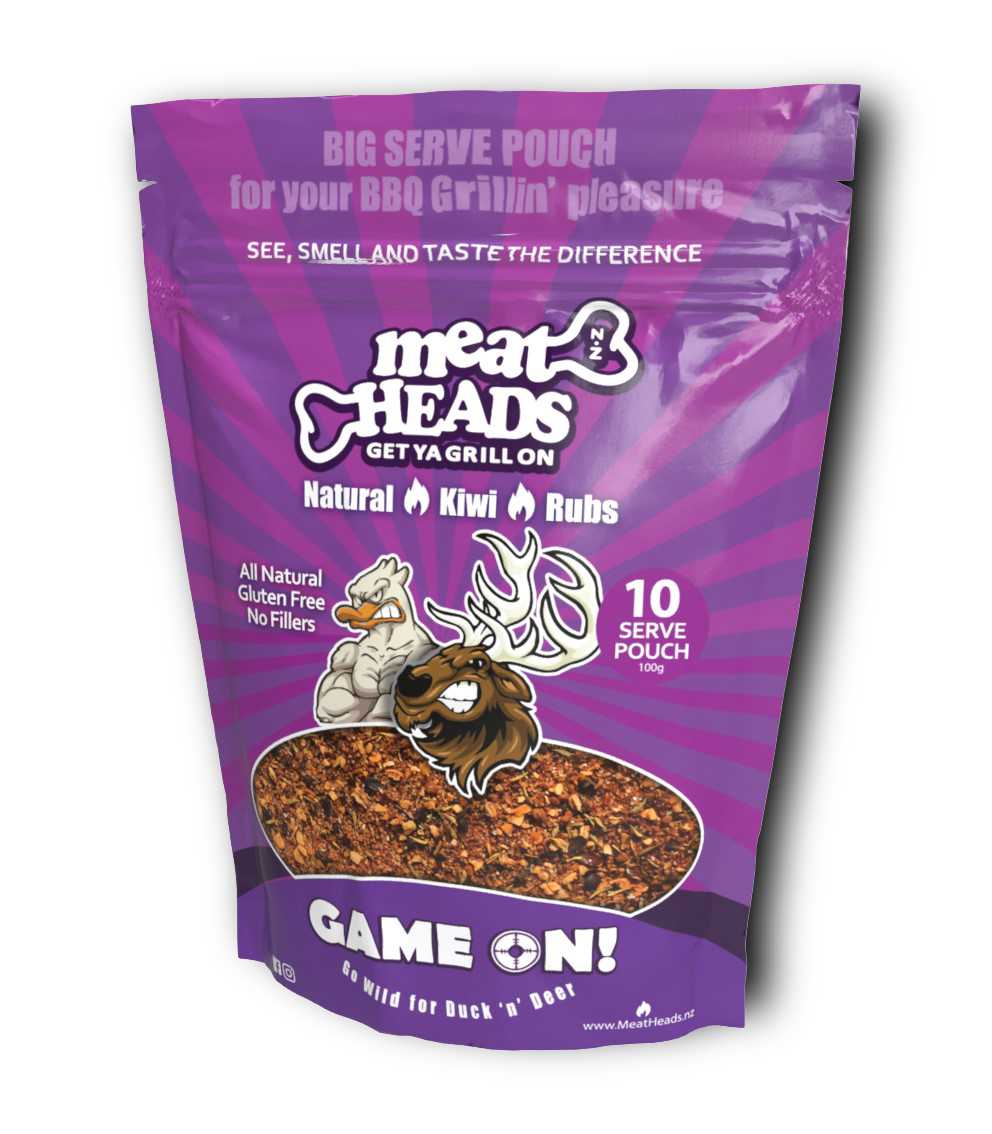
Game On Venison and Duck Rub
Game On, 100g resealable pouch — a dry rub for venison, duck and other wild meat, from a Hobsonville maker and couriered anywhere in Auckland.
Game On
$8.49
$84.90 per kg · about 12 tablespoons in the pouch
Sold by MeatHeads NZ
Price and availability update live from the listing. The description above is the seller's own wording, reproduced as written and not endorsed or verified by DoorToShop. Any statement in it about ingredients, allergens or what the blend is free of belongs to the maker — the ingredient and allergen statement printed on the pack is the one that counts.
Lean Meat and Fat Meat, on the Same Shelf
Game covers two opposite problems. Most of it is far leaner than farmed meat; duck is the exception and has more fat than almost anything:
Venison backstrap and loin
Extremely lean, which means almost no margin. Season it, sear it hard and fast, and take it off well before you think you should. There is no fat to keep it moist and no rub that saves it once it is past medium-rare.
Venison shoulder, neck and shanks
The opposite job. Tough, worked muscle that wants hours of low, moist heat. Season heavily and early — a braise distributes seasoning through everything in the pot.
Duck breast
Fat cap on one side, lean meat on the other. Score the fat in a crosshatch, season both sides, and start it in a cold dry pan skin side down so the fat renders out slowly before the meat cooks.
Sausages and mince from game
Usually blended with pork fat to make up for how lean the meat is. Season with a lighter hand — the mix is already seasoned by whoever made it.
Older or stronger meat
A more assertive blend is doing real work here rather than just adding flavour. Season generously; this is the situation the whole category of game rubs exists for.
Cooking a Venison Backstrap
The cut that most rewards getting right and least forgives getting wrong. Everything here is about heat and timing rather than seasoning:
Trim the silverskin off.
The shiny membrane along the loin does not break down and will contract in the pan, curling the meat and making it chewy. Slide a thin blade under it and take it off in strips.
Bring it to room temperature and dry it.
A cold centre in a lean cut means the outside overcooks while you wait for the middle. Thirty minutes out, then patted dry.
Season all over, generously.
Tip into a bowl and coat every surface including the ends. Game stands up to seasoning better than most meat, and the crust is where the rub does its work.
Sear it hard in a very hot pan.
Fat or oil that can take the heat, and do not crowd the pan. You want colour fast, because there is almost no time before the interior overtakes you.
Pull it at a lower temperature than you would beef.
A thermometer, not a clock. Lean meat goes from rare to grey with very little warning, and there is no fat to disguise it once it does.
Rest it for as long as it cooked, roughly.
Under loose foil. A lean cut that is sliced immediately loses its juices onto the board and there is nothing left to compensate.
Keep the container away from the raw meat. Tip what you need into a bowl and season from that, rather than dipping a hand that has touched raw meat back into the pouch or tin. Anything that goes back in the container has been in contact with raw protein and will sit there until the next time you cook. Wash hands, boards and tongs between raw and cooked, and never reuse a rub that has touched raw meat as a finishing seasoning.
General technique, not instructions for a particular product. Where the packaging gives its own directions, follow those.
Duck, and the Cold Pan Trick
Duck breast is the other half of what this blend is sold for, and it is cooked in a way that looks wrong the first time:
- Score the fat, not the meat. Parallel cuts a centimetre apart, then across, through the fat only. It gives the fat somewhere to escape and the seasoning somewhere to go.
- Season the fat side and the meat side. Both, and press it into the scored cuts on the fat side.
- Start it in a cold, dry pan, skin down. No oil. A duck breast renders its own. Bringing the pan up slowly from cold is what melts the fat out rather than searing it shut.
- Pour the fat off as it collects. Into a jar. It is the best thing you will ever roast potatoes in, and leaving it in the pan effectively fries the breast.
- Flip only at the end. A minute or two on the meat side, no more. Almost all the cooking happens skin down.
- Rest it, then slice across the grain. Five to ten minutes. Duck breast is served pink; cooking it through gives you something closer to liver in texture.
What a 100g Pouch Comes To
If you are seasoning a whole animal's worth of meat after a hunt rather than a single backstrap, work out what you have and buy accordingly — a pouch that covers a season of dinners will not cover a chest freezer being processed in one weekend.
Working assumptions, stated so you can check them: a level tablespoon of dry rub is about 8g, and a common rule of thumb is around 15g of rub per kilogram of meat. Season to taste rather than to a number. All figures come from the live listed price.
Where to Buy It
This pouch is listed by MeatHeads NZ on DoorToShop, and it is the blend that distinguishes the Gone Hunting pack. Our guide to meat and BBQ rubs in Auckland covers the whole range, and the wider Groceries category has other local stores you can add to the same order.
Think about how much meat you are seasoning.
A single backstrap and a whole processed animal are very different quantities. If it is the latter, buy more than one pouch or look at the packs.
Add to cart.
Order from MeatHeads NZ on DoorToShop. It is a multi-merchant marketplace, so you can add items from other local stores to the same order.
Check out.
Pay securely by card or net banking. There is no minimum order value.
Receive your order.
The store dispatches the next business day and courier delivery typically takes 1–3 business days. Track your order on the web or in the DoorToShop app.
Delivery is $5 as a base fee, with free delivery on orders above $69, and there is no minimum order value. Enter your postcode at checkout to confirm delivery coverage for your address, or read how DoorToShop works.
Frequently Asked Questions: Game Rub
What is Game On for?
Game meat. The seller describes it as a blend for venison, duck and other wild meats. Like the rest of this range it is pointed at a particular kind of protein rather than restricted to it.
Why does venison dry out so easily?
Because it is very lean. Farmed beef and lamb carry intramuscular fat that keeps them forgiving well past medium; most cuts of venison have almost none, so there is nothing to disguise overcooking and very little margin between rare and grey. Cook to temperature with a thermometer rather than to a clock, and take it off earlier than instinct suggests.
Should I trim the silverskin?
Yes, on backstrap and loin. It is the shiny membrane along the outside, it does not break down with cooking, and it contracts in the pan — which curls the meat and makes it chewy. Slide a thin blade underneath and take it off in strips.
How do I cook duck breast?
Score the fat in a crosshatch without cutting into the meat, season both sides, and start it skin down in a cold dry pan with no oil. Bringing the pan up from cold renders the fat out slowly rather than sealing it in. Pour the rendered fat off as it collects, flip for a minute or two at the very end, then rest it and slice across the grain. It is served pink.
Should I season game more heavily than farmed meat?
Generally yes. Game has a stronger flavour of its own, and a rub aimed at it is doing real work rather than simply adding seasoning — particularly with older or stronger meat. Braising cuts like shoulder and shank take the most, because the seasoning distributes through the whole pot.
Can I use it on a slow-cooked venison shoulder?
That is one of the better uses for it. Tough, worked cuts want hours of low moist heat, and seasoning heavily and early means the flavour ends up right through the dish rather than only on the surface.
How much rub per kilogram?
Around two level tablespoons per kilogram as a starting point, more for a braise, less for mince that has already been seasoned by whoever made it. Season to taste rather than to a number.
Is it any good on farmed meat?
It is a seasoning, so there is nothing stopping you. A game blend on beef will taste like a game blend on beef — which some people want and some do not. The range has a separate blend for beef if that is what you are after.
What is in it, and is it suitable if I avoid something?
The ingredient and allergen statement printed on the pack is the only answer to that, and it is the maker's to give. This listing does not publish an ingredient list, and anything the seller's own description says about what the blend contains or is free of is their statement rather than ours. If you are avoiding an allergen, read the pack and ask the maker if anything is unclear.
How fast is delivery?
Orders are dispatched by the store the next business day and typically arrive within 1 to 3 business days by courier. Enter your address at checkout to confirm delivery coverage for your address.
How much does delivery cost?
The base delivery fee is $5 NZD, with free delivery on orders above $69 in the Auckland region — the exact amount is confirmed at checkout. There is no minimum order value.
What if it arrives damaged?
Photograph it as it arrived and contact the store the same day. Returns are handled by the store that sold the item, and nothing in a store's policy limits your rights under the Consumer Guarantees Act 1993.