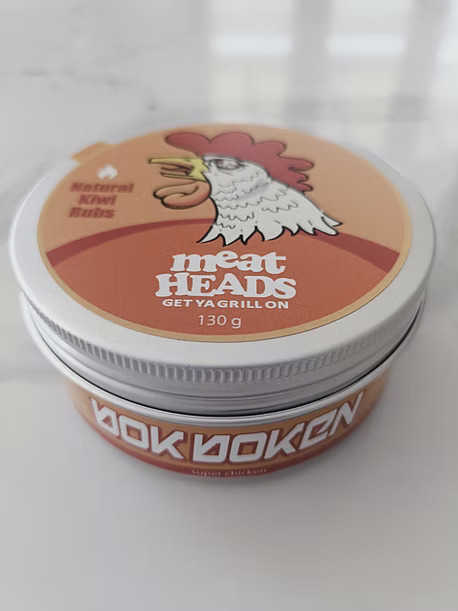
Bok Boken Chicken Rub
Bok Boken — a dry rub for chicken and turkey, sold as a 100g pouch or a 130g tin. From a Hobsonville maker, couriered anywhere in Auckland.
Pouch · 100g

Bok Boken
$8.47
$8.47 per 100g
Tin · 130g
Bok Boken
$17.00
$13.08 per 100g
Both formats sold by MeatHeads NZ
Prices and availability update live from the two listings. The descriptions above are the seller's own wording, reproduced as written and not endorsed or verified by DoorToShop. Any statement in them about ingredients, allergens or what the blend is free of belongs to the maker — the ingredient and allergen statement printed on the pack is the one that counts.
A Chicken Is Not One Thing
Skin, breast, thigh and wing all take seasoning differently, and a whole bird is all four at once. Where the rub goes matters more than how much of it there is:
Skin-on
Seasoning the outside of the skin flavours the skin. To get anything into the meat you have to get under it — slide a finger between skin and breast to loosen it, then push rub into the gap. Do both: under the skin for the meat, over it for the crust.
Skinless breast
Very little fat and very little time before it dries out. Season it just before it cooks, keep the heat moderate rather than fierce, and take it off earlier than feels right — it carries on cooking off the heat.
Thighs and drumsticks
Far more forgiving. Enough fat and connective tissue to survive being over-seasoned and overcooked, which makes them the cut to use while you are working out how heavy-handed to be with a new blend.
A whole bird
Season it and leave it uncovered in the fridge overnight if you can. The salt in the rub works into the meat while the skin surface dries out, and dry skin is the whole secret to skin that crisps rather than steams.
Seasoning a Whole Chicken
The version that makes the biggest difference for the least effort. It takes ten minutes the night before and changes both the meat and the skin:
Dry the bird inside and out.
Paper towels, thoroughly, including the cavity. Everything that follows works better on a dry surface and the skin will not crisp on a wet one.
Loosen the skin over the breast.
Slide a finger in at the neck end and work it back along each breast, keeping the skin attached at the edges. Go gently — a torn skin will shrink back off the meat as it cooks.
Season under the skin first.
Push rub into the gap you have made and spread it across the breast with your fingers from the outside. This is the part that actually seasons the meat.
Then season the outside and the cavity.
Tip the rub into a bowl and scatter it over the whole bird from a height, then a spoonful into the cavity. Do not go back into the container with a hand that has touched the bird.
Leave it uncovered in the fridge overnight.
On a rack over a tray so air gets underneath. The salt works into the meat and the skin dries out, which is what lets it crisp rather than steam.
Roast it straight from the fridge, cold.
No need to bring it to room temperature — a cold start gives the skin longer to render and colour before the breast overcooks.
Keep the container away from the raw meat. Tip what you need into a bowl and season from that, rather than dipping a hand that has touched raw meat back into the pouch or tin. Anything that goes back in the container has been in contact with raw protein and will sit there until the next time you cook. Wash hands, boards and tongs between raw and cooked, and never reuse a rub that has touched raw meat as a finishing seasoning.
General technique, not instructions for a particular product. Where the packaging gives its own directions, follow those.
Why It Burns, and Which Container to Buy
Two separate questions people arrive with. The first is about cooking, the second about which of the two listings above to click:
- Barbecue rubs usually contain sugar, and chicken must cook through. That is the whole problem — beef can come off rare, chicken cannot, so the rub is on the heat far longer and sugar chars.
- The fix is indirect heat. Bank the coals to one side, or use one burner, and put the chicken on the side with no flame under it. Or cook it mostly plain and apply the rub for the last stretch so it sets rather than scorches.
- Dark is not the same as burnt. A deep mahogany crust on a slow-cooked bird is doing what it should; bitter black patches over flame are not. Taste a corner rather than guessing.
- On the containers: the tin is for outdoors. Rigid, one-handed, will not tear or slump, seals against a rim rather than a zip with powder in it.
- The pouch is for the cupboard. It is normally cheaper per gram, and indoors none of the tin's advantages are doing anything for you.
- Buy the tin once, refill it from pouches. That is how you stop paying the container premium twice — empty and wipe it dry rather than topping up over an old blend.
Pouch or Tin, at Today's Prices
On weight the tin currently works out $4.61 more per 100g — about 54% dearer than the pouch for the same blend. That is worth saying plainly rather than burying: you are buying the tin for the tin. It stands up in a cupboard, cannot tear at a seam, seals against a rigid rim instead of a zip that powder stops closing, opens with one hand at a barbecue, and can be refilled from a pouch afterwards. If what you want is the seasoning at the lowest price per gram, buy the pouch.
For a cupboard, the pouch does the job for less. For a bench beside a barbecue — carried out, put down, opened one-handed, rained on — the rigid container is worth something real. If you want both, the cheapest route is to buy the tin once and refill it from pouches from then on.
Both figures are read live from their own listings, so this comparison reflects what the two are selling for today rather than what they cost when this page was written — and it reverses itself correctly if the prices change. A level tablespoon of dry rub is about 8g, which puts roughly 12 in the pouch and 16 in the tin.
Where to Buy It
Both formats are listed by MeatHeads NZ on DoorToShop, alongside the rest of the range and the multi-packs — this blend is in every one of them. Our guide to meat and BBQ rubs in Auckland covers the whole line-up, and the wider Groceries category has other local stores you can add to the same order.
Pick the format before the quantity.
Cupboard, or barbecue bench? That decides it faster than the price per gram does — and if the answer is both, buy the tin once and refill it from pouches.
Add to cart.
Order from MeatHeads NZ on DoorToShop. It is a multi-merchant marketplace, so you can add items from other local stores to the same order.
Check out.
Pay securely by card or net banking. There is no minimum order value.
Receive your order.
The store dispatches the next business day and courier delivery typically takes 1–3 business days. Track your order on the web or in the DoorToShop app.
Delivery is $5 as a base fee, with free delivery on orders above $69, and there is no minimum order value. Enter your postcode at checkout to confirm delivery coverage for your address, or read how DoorToShop works.
Frequently Asked Questions: Bok Boken Chicken Rub
What is Bok Boken for?
Poultry. The seller describes it as a seasoning for chicken, turkey and rice dishes. As with everything in this range, each blend is pointed at a particular protein rather than restricted to it.
What is the difference between the pouch and the tin?
The blend is the same. The tin holds more, is rigid, reseals against a flat rim rather than a zip, opens one-handed and can be refilled; the pouch is normally cheaper per gram. The comparison further up this page works both figures out from the two live listings.
Which one should I buy?
For a cupboard, the pouch — none of the tin's advantages help you indoors. For a bench beside a barbecue, the tin. If you want both, buy the tin once and refill it from pouches, which is the cheapest way to have the container without paying for it repeatedly.
Should the rub go on top of the skin or under it?
Both, and for different reasons. Rub on top of the skin flavours the skin and helps it colour. Rub under the skin is what actually seasons the breast meat. Loosen the skin with a finger at the neck end, push seasoning into the gap, then season the outside as well.
How far ahead should I season a chicken?
Overnight, uncovered, in the fridge, if you have the time. The salt works into the meat while the surface of the skin dries out, and dry skin is what crisps. If you do not have the time, seasoning just before cooking is still worth doing — you just get a flavoured surface rather than seasoned meat.
Why does my rub burn on the barbecue?
Because barbecue rubs generally contain sugar, and chicken has to cook through rather than coming off rare. That means longer on the heat, and sugar over direct flame chars. Cook the chicken indirect — coals or burners on one side, bird on the other — or apply the rub only for the last part of the cook.
Can I use it on skinless chicken breast?
Yes, but season it just before it goes on rather than hours ahead, keep the heat moderate, and take it off sooner than feels right. Breast has very little fat and goes from done to dry quickly, and a rub will not save an overcooked one.
Is this a dry brine?
Used a certain way, effectively yes. Seasoning a bird with a salted rub and leaving it uncovered in the fridge overnight is what most people mean by dry brining — the salt draws moisture out, dissolves, and is drawn back in carrying seasoning with it. The difference from a wet brine is that the skin dries out rather than getting wetter, which is why it crisps better.
How much should I use on a whole chicken?
Around two level tablespoons is a reasonable starting point for a standard bird, split between under the skin, over the skin and the cavity. Season to taste rather than to a number.
Can I put the rub back in the container after handling raw chicken?
No. Tip out what you need into a bowl before you start and season from that. Raw chicken residue going back into a container that will sit in a cupboard for weeks is exactly the situation to avoid.
Which format is in the multi-packs?
The packs are built from 100g pouches. Same blend, different format — if you specifically want the tin, buy the tin listing.
What is in it, and is it suitable if I avoid something?
The ingredient and allergen statement printed on the pack is the only answer to that, and it is the maker's to give. This listing does not publish an ingredient list, and anything the seller's own description says about what the blend contains or is free of is their statement rather than ours. If you are avoiding an allergen, read the pack and ask the maker if anything is unclear.
How fast is delivery?
Orders are dispatched by the store the next business day and typically arrive within 1 to 3 business days by courier. Enter your address at checkout to confirm delivery coverage for your address.
How much does delivery cost?
The base delivery fee is $5 NZD, with free delivery on orders above $69 in the Auckland region — the exact amount is confirmed at checkout. There is no minimum order value.
What if it arrives damaged?
Photograph it as it arrived and contact the store the same day. Returns are handled by the store that sold the item, and nothing in a store's policy limits your rights under the Consumer Guarantees Act 1993.