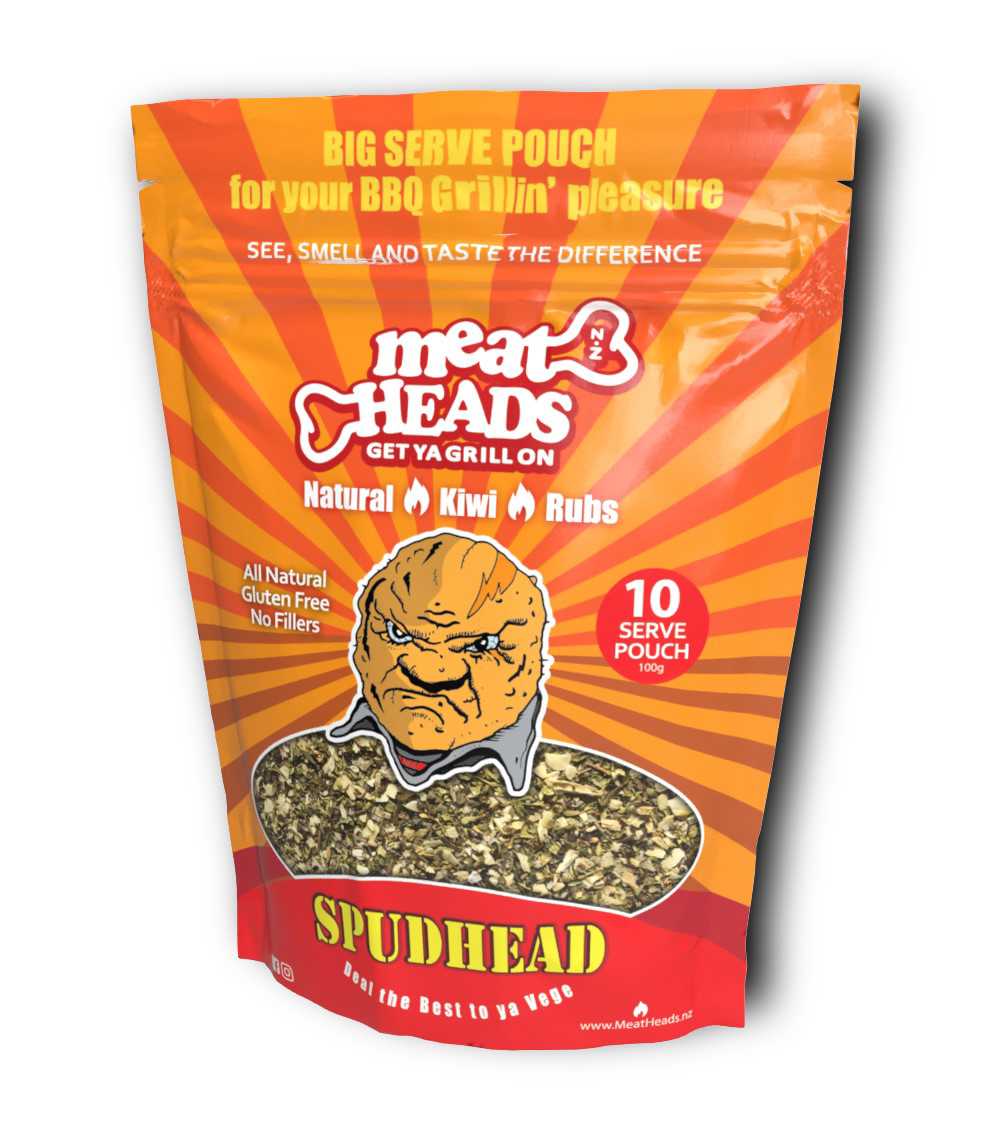
Spudhead Vegetable Rub
Spudhead, 100g resealable pouch — a dry seasoning for potatoes, roast vegetables and soups, from a Hobsonville maker and couriered anywhere in Auckland.
Spudhead
$8.49
$84.90 per kg · about 12 tablespoons in the pouch
Sold by MeatHeads NZ
Price and availability update live from the listing. The description above is the seller's own wording, reproduced as written and not endorsed or verified by DoorToShop. Any statement in it about ingredients, allergens or what the blend is free of belongs to the maker — the ingredient and allergen statement printed on the pack is the one that counts.
Vegetables Need More Than Meat Does
A steak brings its own flavour to the party. A potato does not, which is why the same amount of seasoning that would overwhelm meat can disappear entirely on a tray of vegetables:
Roast potatoes
The biggest appetite for seasoning of anything here. Parboil, rough up the edges in the colander, coat in hot oil, then season — the fluffy broken surface is what holds it, and there is a great deal of surface once you have roughed them up.
Root vegetables
Carrot, parsnip, kūmara. All sweet, all improved by something savoury against them. Toss in oil and seasoning before they go in rather than sprinkling afterwards.
Green vegetables
Broccoli, beans, courgette. Less surface, more water, and they go from seasoned to soggy faster. A lighter hand and a hotter oven.
Soups and stews
Add it early, with the onions, so it has time to cook out and distribute. A dry blend stirred into a finished soup tastes exactly like a dry blend stirred into a finished soup.
Mashed potato
Season the mash, not the water. Fold it through at the end with the butter, taste, and add more — mash absorbs an amount of seasoning that surprises people every time.
Roast Potatoes, Properly Seasoned
Oil is the whole mechanism here. A dry seasoning on a dry potato falls into the bottom of the tray and burns there:
Parboil and drain properly.
Ten minutes or so in salted water, then drain and leave them a minute to steam dry. Wet potatoes will not crisp and will not hold oil.
Rough them up in the colander.
Lid on, a couple of firm shakes. You are trying to break the outside into a fluffy, broken surface — that surface is what goes crisp and it is what the seasoning holds onto.
Get the oil hot first, in the tray.
In the oven while you are parboiling. Cold oil soaks in; hot oil sears the outside on contact.
Coat them in the oil, then season.
This order matters. Oil is the carrier — seasoning applied first slides off, and seasoning applied to dry potatoes ends up on the tray. Toss in oil, then scatter the blend and toss again.
Use more than feels right.
A kilogram of potatoes will take a good tablespoon and still not be over-seasoned. Vegetables have almost none of their own savoury flavour to compete with.
Give them space and leave them alone.
Crowded potatoes steam. One layer, plenty of gaps, and do not turn them for the first twenty-five minutes — they release from the tray when a crust has formed, just like meat does.
Keep the container away from the raw meat. Tip what you need into a bowl and season from that, rather than dipping a hand that has touched raw meat back into the pouch or tin. Anything that goes back in the container has been in contact with raw protein and will sit there until the next time you cook. Wash hands, boards and tongs between raw and cooked, and never reuse a rub that has touched raw meat as a finishing seasoning.
General technique, not instructions for a particular product. Where the packaging gives its own directions, follow those.
When to Add It, by Dish
For vegetables the timing question is less about salt and moisture and more about giving a dry blend somewhere to go:
- Roasting: after the oil, before the oven. The oil is what holds it. Seasoning a tray on the way out means it sits on top rather than being part of the dish.
- Soups and stews: at the start, with the onions. It needs time in fat and liquid to distribute. A blend stirred into a finished pot tastes raw and settles to the bottom.
- Mash: at the end, with the butter. Fold it through, taste, and add more. Do not season the cooking water and expect it to arrive in the potato.
- Chips and wedges: straight out of the oven or fryer. While the surface is hot and oily and can still hold it. Ten seconds later it will not.
- Salads and raw vegetables: mix it into the dressing. A dry blend on wet leaves clumps. Whisk it into the oil and acid instead.
- Barbecued vegetables: oil, season, then grill. Same rule as roasting, and keep them over the cooler part so a blend containing sugar does not catch.
What a 100g Pouch Comes To
Vegetables get through seasoning faster than meat does — a tray of roast potatoes for four takes a good tablespoon on its own. Used across a week of dinners rather than on one Sunday roast, this is the pouch in the range that empties first.
Working assumptions, stated so you can check them: a level tablespoon of dry rub is about 8g, and a common rule of thumb is around 15g of rub per kilogram of meat. Season to taste rather than to a number. All figures come from the live listed price.
Where to Buy It
This pouch is listed by MeatHeads NZ on DoorToShop, and it is the blend that rounds out the Fish 'n Chips pack. Our guide to meat and BBQ rubs in Auckland covers the whole range, and the wider Groceries category has other local stores you can add to the same order.
Note this is the one that gets used most.
A vegetable seasoning goes into weeknight cooking far more often than a specialist meat rub, so it is worth buying alongside whichever meat blend you choose.
Add to cart.
Order from MeatHeads NZ on DoorToShop. It is a multi-merchant marketplace, so you can add items from other local stores to the same order.
Check out.
Pay securely by card or net banking. There is no minimum order value.
Receive your order.
The store dispatches the next business day and courier delivery typically takes 1–3 business days. Track your order on the web or in the DoorToShop app.
Delivery is $5 as a base fee, with free delivery on orders above $69, and there is no minimum order value. Enter your postcode at checkout to confirm delivery coverage for your address, or read how DoorToShop works.
Frequently Asked Questions: Vegetable Seasoning
What is Spudhead for?
Vegetables. The seller describes it as a seasoning for roasted vegetables, mashed potatoes and soups. It is the one blend in this range not aimed at a protein.
Why do vegetables need more seasoning than meat?
Because they bring far less savoury flavour of their own. A steak is already intensely meaty before anything is added; a potato is not. The same quantity that would overwhelm a piece of fish will vanish on a tray of roast potatoes.
Should I oil the vegetables before or after seasoning?
Oil first, then season. The oil is what the dry blend sticks to. Season dry potatoes and most of it ends up on the bottom of the tray, where it burns rather than flavouring anything.
How much for a tray of roast potatoes?
A good level tablespoon for around a kilogram, and you will probably want more rather than less. Toss, taste one when they come out, and adjust next time.
When should I add it to a soup?
At the start, with the onions, so it has time in fat and liquid to cook out and distribute. Stirred into a finished pot it tastes raw and tends to settle to the bottom.
How do I season mashed potato?
Fold it through at the end with the butter, then taste and add more. Seasoning the cooking water does very little — most of it goes down the sink. Mash absorbs a surprising amount.
Why won't my roast potatoes go crisp?
Usually three things, none of which are the seasoning: they went in wet, the oil was cold, or the tray was crowded. Parboil, steam-dry, rough the edges up in the colander, use oil that is already hot, and give them space in a single layer.
Can I use it on chips or wedges?
Yes, and straight out of the oven or fryer while the surface is still hot and oily. Toss them in a bowl with a pinch rather than sprinkling on a plate — ten seconds later the surface has set and it will not hold.
What is in it, and is it suitable if I avoid something?
The ingredient and allergen statement printed on the pack is the only answer to that, and it is the maker's to give. This listing does not publish an ingredient list, and anything the seller's own description says about what the blend contains or is free of is their statement rather than ours. If you are avoiding an allergen, read the pack and ask the maker if anything is unclear.
How fast is delivery?
Orders are dispatched by the store the next business day and typically arrive within 1 to 3 business days by courier. Enter your address at checkout to confirm delivery coverage for your address.
How much does delivery cost?
The base delivery fee is $5 NZD, with free delivery on orders above $69 in the Auckland region — the exact amount is confirmed at checkout. There is no minimum order value.
What if it arrives damaged?
Photograph it as it arrived and contact the store the same day. Returns are handled by the store that sold the item, and nothing in a store's policy limits your rights under the Consumer Guarantees Act 1993.