
Shop Coconut Cream Online

A 1 litre carton delivered from a local store — cream against milk against water, why it separates, how to keep a curry from splitting, and what a litre comes to against a can.

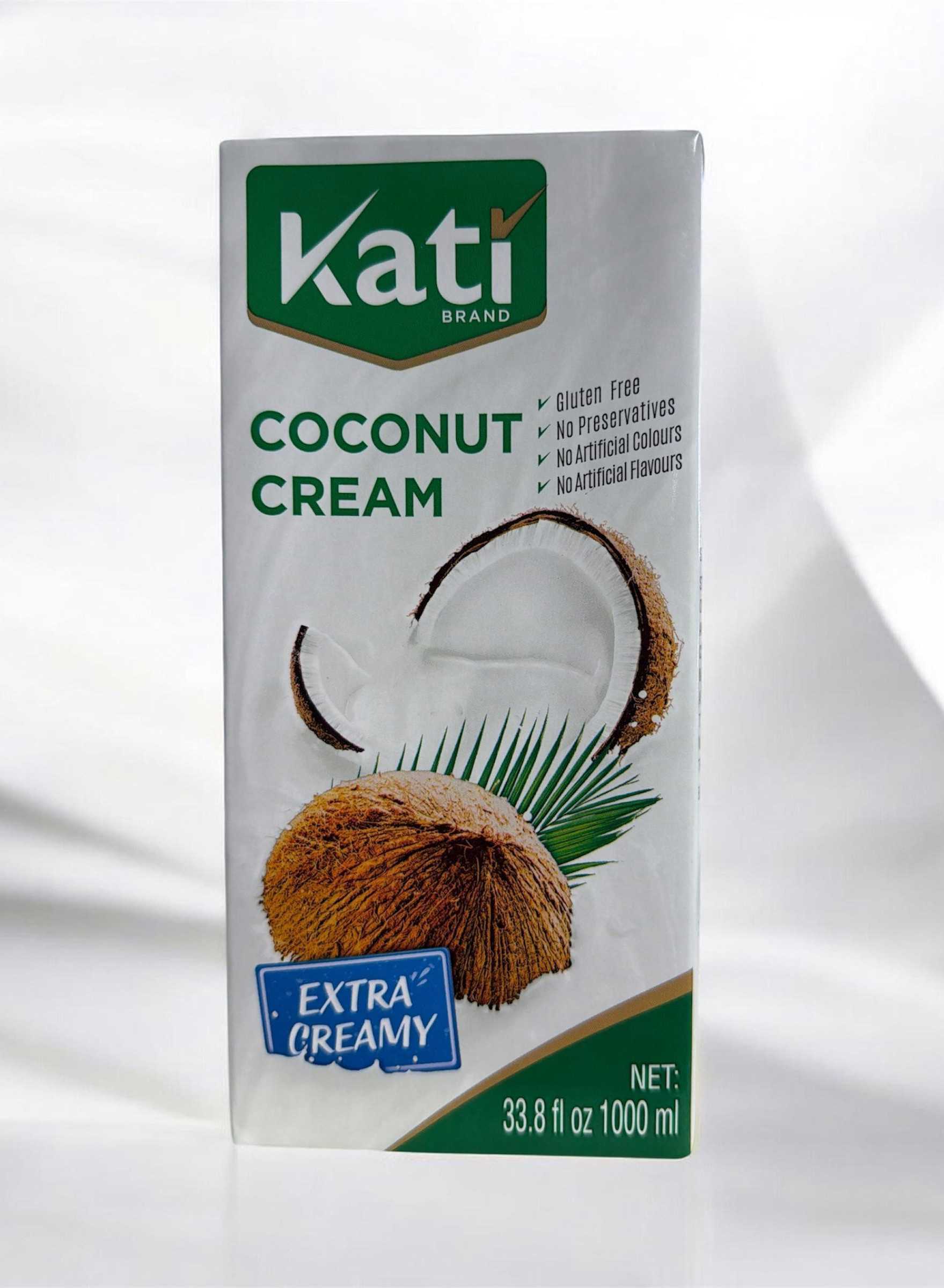
KATI COCONUT CREAM 1L — sold by Easy Grocery on DoorToShop

KATI COCONUT CREAM 1L

$8.00

about $3.20 per 400ml can equivalent

Sold by Easy Grocery

Kati Coconut Cream 1L is a thick, velvety, and dairy-free plant-based cream. Imported from Vietnam, it features a rich and tropical coconut flavor.
View product →

Price and availability update live from the listing. The description above is the seller's own wording, reproduced as written, and is not endorsed or verified by DoorToShop — read the carton for the ingredient list, allergen information and storage directions, none of which the listing publishes.

Cream, Milk or Water

Three products, one coconut, and only one of them will thicken a sauce. The difference is how much water is in it:

Coconut cream

The thick, concentrated press from grated coconut flesh and water, with the highest proportion of coconut solids and fat of the three. It is what gives a curry body and what sets a coconut dessert. Thick enough that it will often be solid at the top of the container.

Coconut milk

The same thing diluted. Thinner, paler, and lower in coconut solids — a second press, or cream let down with water. Fine where you want volume and a lighter result, but it will not thicken a sauce the way cream does.

Coconut water

Nothing to do with either. It is the thin, clear liquid found inside a young green coconut, drunk as it is. It has no fat and no body, and swapping it into a recipe that wants cream will produce something watery and disappointing.

Making milk from cream

You can go down the ladder but not up. Coconut cream thinned with water gives you a serviceable coconut milk — roughly one part cream to one part water as a starting point — and that is the practical argument for keeping cream rather than milk in the cupboard.

Keeping It From Splitting

Almost every complaint about coconut cream comes down to one thing: it was boiled. The fat and the solids come apart under hard heat and you get a greasy, grainy sauce instead of a smooth one. Gentle heat, added late, and it behaves.

1

Shake or stir it before you pour.

Coconut cream separates in the container into a thick layer and a thinner liquid. That is what it does, not a sign that anything is wrong with it. Shake the carton hard, or tip it into a bowl and whisk it smooth, before measuring anything out.

2

Keep the heat gentle.

This is the whole trick. Coconut cream splits into oil and solids if it is boiled hard, which is where the greasy, grainy curry comes from. Bring it to a bare simmer and hold it there — small bubbles at the edge of the pan, never a rolling boil.

3

Add it late rather than early.

In most curries it goes in towards the end, once the aromatics are cooked and the meat or vegetables are nearly done. The longer it sits over heat, the more chance it has to separate.

4

Do not let it catch on the base.

Stir it through rather than leaving the pan alone, particularly in a thin-based pan. Coconut solids stick and scorch quickly, and a scorched note goes through the whole dish.

5

If it does split, take it off the heat and whisk.

Off the heat, a vigorous whisk will often bring a lightly split sauce back together, and a spoonful of cold cream or a little cornflour slurry helps. A sauce that has been boiled hard for ten minutes is usually past rescuing.

General technique, not instructions for a particular product. Where the packaging gives its own directions, follow those.

After You Open a Litre

A litre is around two and a half recipes' worth, so unlike a single can most of this carton has a second life to plan for:

  • Refrigerate it once opened and follow the storage direction printed on the carton — a litre is well beyond a single recipe, so most of it will be sitting in the fridge.
  • Decant what you are not using soon into a sealed container rather than leaving the carton open in the fridge door, where it warms every time the door swings.
  • It freezes, with a caveat. An ice cube tray gives you recipe-sized portions, and frozen cream works perfectly well cooked into a curry or a soup. It does separate more noticeably after thawing, so it is less suited to anything where the texture is on show.
  • Expect separation in the fridge. Cold makes the fat firm up and rise; a stir or a few seconds of gentle warming brings it back.
  • Chilled cream can be whipped. A carton left in the fridge overnight, with the firm part spooned off, whips much like dairy cream — the reason people buy cream rather than milk for desserts.

On dairy and allergens. Coconut cream is pressed from coconut rather than made from milk — "cream" is describing the texture, not the source. That is a point about what it is, not an allergen statement: formulations and manufacturing differ, and only the label speaks for the carton in front of you.

Worth knowing if you read labels for allergen reasons: coconut is not among the tree nuts that must be declared as allergens in Australia and New Zealand, while some other countries treat it as one — so an imported product may be labelled to a different convention. If you are avoiding something for an allergy, read the pack and speak to your doctor rather than relying on a general description.

What a Litre Comes To

$8.00 The carton, at 1 litre
$8.00 Per litre
$3.20 Per 400ml can equivalent

A litre is about 2.5 standard cans, and since nearly every recipe is written around one can, that is the comparison worth making rather than the price per litre. Worked out from the live listed price.

Where to Buy It

This carton is listed by Easy Grocery on DoorToShop, alongside the rest of their range — atta and rice, dals, whole and ground spices, ghee and cooking oils, tea and snacks. Our guide to the store covers what else they stock, and the wider Groceries category has other local stores you can add to the same order.

1

Check it is cream, not milk.

The two sit next to each other and are not interchangeable in a recipe that needs body.

2

Work out the per-can figure.

Most recipes are written around a 400ml can. A litre is about 2.5 of them, which is the comparison that means something.

3

Add to cart.

Order from Easy Grocery on DoorToShop. It is a multi-merchant marketplace, so you can add items from other local stores to the same order.

4

Check out.

Pay securely by card or net banking. There is no minimum order value.

5

Receive your order.

The store dispatches the next business day and courier delivery typically takes 1–3 business days. Track your order on the web or in the DoorToShop app.

Delivery is $5 as a base fee, with free delivery on orders above $69, and there is no minimum order value. Enter your postcode at checkout to confirm delivery coverage for your address, or read how DoorToShop works.

Frequently Asked Questions: Coconut Cream

What is the difference between coconut cream and coconut milk?

Concentration. Coconut cream is the thick press from grated coconut flesh, with the most coconut solids and fat; coconut milk is the same thing diluted, thinner and lighter. Cream gives a sauce body and sets a dessert, milk mostly adds volume. You can thin cream into milk with water — roughly one to one — but you cannot go the other way.

Is coconut water the same thing?

No, and it is not related in any useful sense. Coconut water is the thin clear liquid inside a young green coconut, with no fat and no body. Substituting it for cream produces a watery result.

Why has my coconut cream separated?

Because that is what it does. The fat and the water in it are not permanently emulsified, so the thick part rises and firms, particularly when cold. It is not a sign of spoilage. Shake the carton hard or whisk it smooth before using.

Why did my curry go greasy and grainy?

It split, which happens when coconut cream is boiled hard. Keep it at a bare simmer — small bubbles at the edge of the pan — and add it towards the end of cooking rather than at the start. If it has only lightly split, taking the pan off the heat and whisking, with a spoonful of cold cream or a little cornflour slurry, will often bring it back.

Can you whip coconut cream?

Yes. Chill the carton overnight, spoon off the firm part and whip that. It behaves much like dairy cream, and it is the main reason to buy cream rather than milk if desserts are the plan.

How long does it keep once opened, and can I freeze it?

Refrigerate it after opening and go by the storage direction on the carton rather than a general figure. It does freeze — an ice cube tray gives you recipe-sized portions — and thawed cream is fine cooked into a curry or soup, though it separates more noticeably, so it suits cooking better than anything where the texture is visible.

Is coconut cream dairy?

Coconut cream is pressed from coconut rather than made from milk — "cream" describes the texture, not the source. That is a compositional point, not an allergen statement: what any particular product contains depends on its formulation and how it was made, so if you are avoiding dairy for an allergy or an intolerance, read the label on the carton and check with the manufacturer if anything is unclear.

Is coconut treated as a tree nut?

It depends on the country. In Australia and New Zealand coconut is not among the tree nuts that must be declared as allergens; some other countries, including the United States, do treat it as one. Imported products may therefore carry labelling written to a different convention, which is worth knowing if you are reading a label for allergen reasons rather than for interest.

How many cans is a litre?

About 2.5, taking the standard supermarket can as 400ml. Most recipes are written around one can, so that is the number to hold in your head.

What does the carton work out at?

At the current price of $8.00, that is $8.00 a litre, or about $3.20 for the equivalent of a 400ml can. Prices move, so check it against the product page.

How fast is delivery?

Orders are dispatched by the store the next business day and typically arrive within 1 to 3 business days by courier. Enter your postcode at checkout to confirm delivery coverage for your address.

How much does delivery cost?

The base delivery fee is $5 NZD, with free delivery on orders above $69 — the exact amount is confirmed at checkout. There is no minimum order value.

What if the carton arrives damaged?

Do not use it. Photograph it as it arrived and contact the store the same day. Returns are handled by the store that sold the item, and nothing in a store's policy limits your rights under the Consumer Guarantees Act 1993.

Voice Shopping

Ready to help

Hi there! 👋

I'm your voice shopping assistant. You can:

  • Search for products
  • Add items to cart
  • Check out
  • Track orders

I'm listening continuously! Just speak your command anytime.

Click to speak