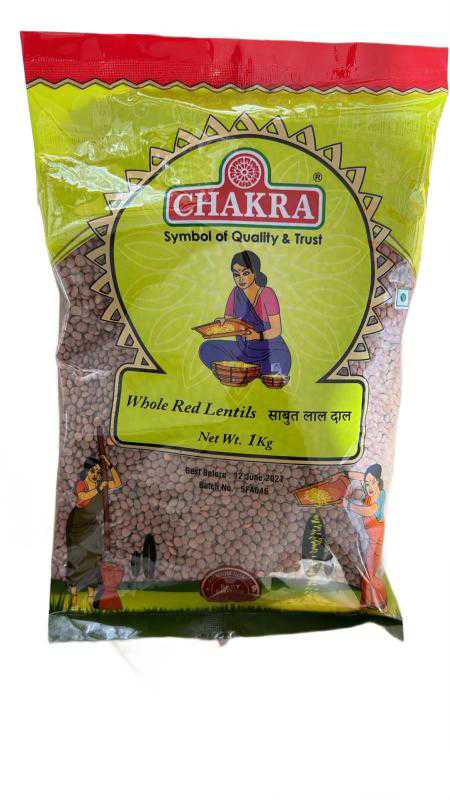
Shop Whole Masoor Dal Online
A 1kg pack delivered from a local store — why whole and split masoor are not the same ingredient, cooking this one so it keeps its shape, and what it comes to a serving.
MASOOR WHOLE 1KG
$3.84
about $3.84 per kilogram · roughly 18 servings
Sold by Easy Grocery
Price and availability update live from the listing. The description above is the seller's own wording, reproduced as written, and is not endorsed or verified by DoorToShop — read the product page for the pack details and the best-before date.
Whole or Split — Not the Same Ingredient
This is the thing worth knowing before anything else. Whole masoor and masoor dal are the same lentil at different stages, and they behave nothing alike. One holds its shape; the other dissolves. Recipes assume you know which you have:
Whole masoor — sabut masoor
The lentil with its skin on: small, domed, and brown to reddish-brown on the outside. It holds its shape through cooking, which is exactly what you want for a salad, a soup with texture, or a sabut masoor dal where the lentils stay recognisable. This is what is in this pack.
Split red masoor — masoor dal
The same lentil skinned and split, which reveals the orange-pink interior. It cooks in fifteen minutes and collapses completely into a smooth purée. If a recipe shows a bright orange dal, it means this, not the brown one.
They are not interchangeable
Substituting one for the other does not go wrong slowly — it goes wrong immediately. Whole masoor in a recipe written for split will still be firm long after the timer; split masoor in a salad recipe turns to soup. Look at the colour before you cook.
Whole masoor is the brown lentil
What Indian recipes call sabut masoor and what a European or British recipe calls brown lentils are the same thing. A puy-style lentil salad, a lentil and bacon soup, and a sabut masoor dal are all built on this pack.
The Method
Where the split dals are cooked until they give up entirely, this one is the opposite: the whole job is stopping at the right moment. Tender through, still recognisable as lentils.
Rinse and pick it over.
Two or three changes of cold water. Whole pulses occasionally carry a small stone or a shrivelled lentil from the field, and tipping the rinsed lentils onto a plate for a quick look takes ten seconds.
Soak for half an hour to two hours.
Optional, but this one benefits where the split version does not — there is a skin to soften. Half an hour makes a noticeable difference to the cooking time; two hours more so. Cook it in fresh water, not the soaking water.
Use about three parts water to one part lentils.
By volume. Bring it to the boil, then drop to a simmer with the lid ajar, skimming any foam in the first few minutes.
Stop while they still have their shape.
Roughly twenty-five to thirty minutes in an open pan for soaked lentils, or two to three whistles in a pressure cooker. This is the opposite of the split dals: you are cooking until they are tender through but still individually recognisable. A minute or two past that and they start breaking down.
Salt at the end, and dress while warm.
Salt goes in once they are tender. If it is a salad, dress the lentils while they are still warm — that is when they take up oil, vinegar or lemon properly. If it is a dal, this is where the tadka goes on.
General technique, not instructions for a particular pack. Where the packaging gives its own directions, follow those.
What to Use It For
- Sabut masoor dal — cooked until tender but whole, with a tadka of ghee or oil, cumin, garlic, ginger and tomato stirred through.
- Lentil salad. Dressed warm with olive oil, lemon or vinegar, then finished with herbs, red onion and something salty. The lentils holding their shape is the entire point of the dish.
- Soup with texture. Where a split dal would disappear into the liquid, whole masoor stays as lentils in a broth — with vegetables, or in the classic lentil-and-smoked-meat direction.
- Alongside rice as a firmer alternative to the smooth dals. Different mouthful, same job on the plate.
- Anywhere a recipe asks for brown or continental lentils. It is the same ingredient under a different name, and usually cheaper by the kilo in an Indian grocery than in a supermarket's speciality aisle.
If you wanted a smooth dal, you wanted a different pulse. Our guides to toor dal and yellow moong dal cover the two that are built to collapse — and the toor page also covers storing dry pulses.
What a 1kg Pack Comes To
Roughly 18 servings from the pack. Worked out from the live listed price — worth comparing against what the same lentil costs by the kilo in a supermarket's speciality aisle, where it is usually sold as brown lentils in much smaller packets.
Where to Buy It
This pack is listed by Easy Grocery on DoorToShop, alongside the rest of their range — other dals and pulses, atta and rice, whole and ground spices, ghee and cooking oils. Our guide to the store covers what else they stock, and the wider Groceries category has other local stores you can add to the same order.
Check it is the whole one.
Brown skins, domed, not orange. Orange and flat means split masoor dal, which behaves completely differently.
Check the price per kilo.
Divide the pack price by the weight and compare it against the smaller packs and the supermarket equivalent.
Add to cart.
Order from Easy Grocery on DoorToShop. It is a multi-merchant marketplace, so you can add items from other local stores to the same order.
Check out.
Pay securely by card or net banking. There is no minimum order value.
Receive your order.
The store dispatches the next business day and courier delivery typically takes 1–3 business days. Track your order on the web or in the DoorToShop app.
Delivery is $5 as a base fee, with free delivery on orders above $69, and there is no minimum order value. Enter your postcode at checkout to confirm delivery coverage for your address, or read how DoorToShop works.
Frequently Asked Questions: Whole Masoor
What is whole masoor?
A small brown lentil with its skin still on, also called sabut masoor. It holds its shape when cooked, which is what separates it from the split version. Outside Indian cooking it is sold simply as brown lentils.
What is the difference between whole masoor and masoor dal?
They are the same lentil at different stages. Whole masoor keeps its brown skin and stays intact through cooking. Masoor dal is that lentil skinned and split, which exposes the orange interior, cooks in about fifteen minutes and collapses into a smooth purée. They are not interchangeable — the colour tells you which you have.
Are brown lentils and whole masoor the same thing?
Yes. What a European or British recipe calls brown lentils is what an Indian recipe calls sabut masoor. A lentil salad, a lentil soup and a sabut masoor dal all start from the same pack.
Do I need to soak whole masoor?
Not strictly, but it helps more here than with a split dal, because there is a skin to soften. Half an hour makes a real difference to the cooking time and two hours more so. Drain it and cook in fresh water.
How long does whole masoor take to cook?
About twenty-five to thirty minutes in an open pan once soaked, or two to three whistles in a pressure cooker. Stop while the lentils are tender through but still individually recognisable — a couple of minutes past that and they begin to break down.
How do I stop the lentils going mushy?
Watch the clock rather than the pot, and take them off while they still have their shape. A gentle simmer rather than a rolling boil helps, and salt goes in at the end. If they are for a salad, drain them as soon as they are tender and dress them warm.
Can I use whole masoor instead of masoor dal in a recipe?
Not on the same timing, and usually not at all. A recipe written for split masoor expects a smooth dal in fifteen minutes; whole masoor will still be firm and separate. If you want a smooth dal, our guides to toor dal and moong dal cover the two that are built for it.
How many servings are in a 1kg pack?
Around 18, taking roughly 55g of dry lentils per person. Fewer if the lentils are the centre of the meal rather than a side.
What does the pack work out at?
At the current price of $3.84, that is $3.84 per kilogram, or about $0.21 a serving. Prices move, so check the arithmetic against the product page.
How should I store it?
Airtight, cool, dark and dry, the same as any dry pulse — our guide to toor dal sets out the detail, including the freezer trick for a newly arrived pack.
How fast is delivery?
Orders are dispatched by the store the next business day and typically arrive within 1 to 3 business days by courier. Enter your postcode at checkout to confirm delivery coverage for your address.
How much does delivery cost?
The base delivery fee is $5 NZD, with free delivery on orders above $69 — the exact amount is confirmed at checkout. There is no minimum order value.
What if the pack arrives damaged?
Photograph it before opening anything further and contact the store the same day. Returns are handled by the store that sold the item, and nothing in a store's policy limits your rights under the Consumer Guarantees Act 1993.