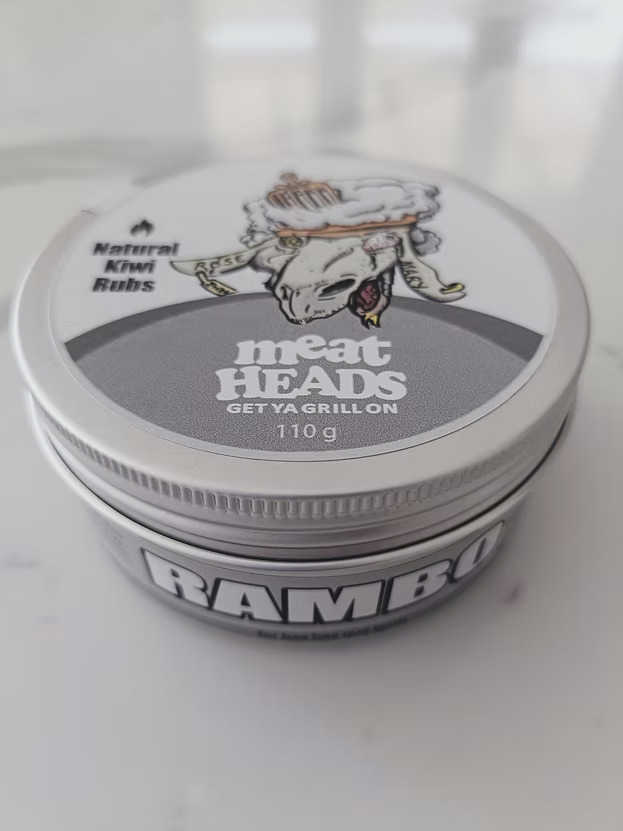
Rambo Lamb Rub

Rambo — a Mediterranean-leaning dry rub for lamb, sold as a 100g pouch or a 110g tin. From a Hobsonville maker, couriered anywhere in Auckland.

Pouch · 100g
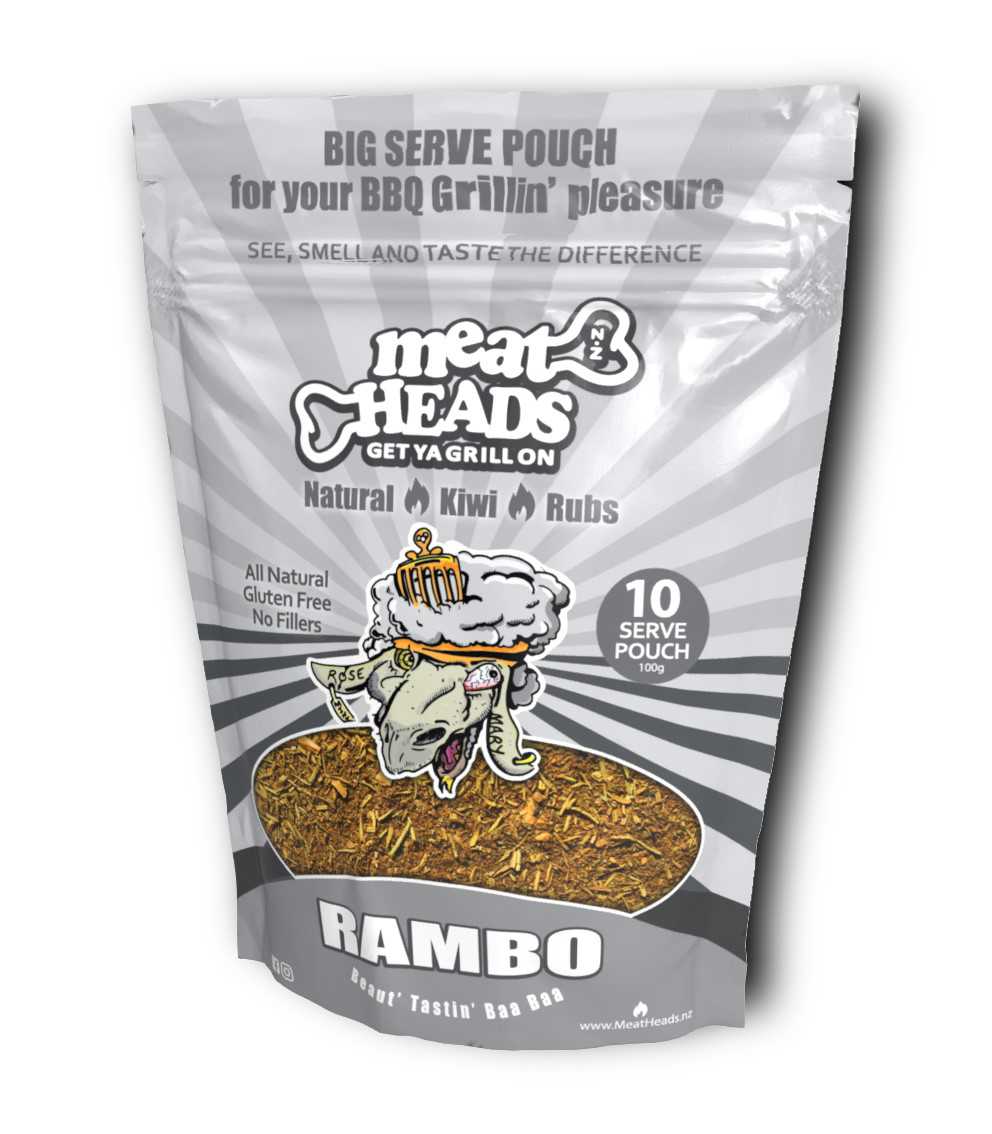
Rambo — sold by MeatHeads NZ on DoorToShop

Rambo

$8.47

$8.47 per 100g

"Rambo 100g resealable pouch delivers bold Mediterranean-inspired flavours perfect for lamb dishes. This gluten-free, MSG-free rub combines natural herbs and spices to enhance lamb roasts, chops, or BBQ skewers. Ideal for grilling, roasting, or slow cooking, Rambo brings a deliciously aromatic touch to your meals. The resealable pouch keeps the blend fresh, ensuring you’re always ready to elevate your lamb creations with vibrant, savory seasoning!"
View product →

Tin · 110g

Rambo — sold by MeatHeads NZ on DoorToShop

Rambo

$17.00

$15.45 per 100g

"Rambo 110g reuseable tin delivers bold Mediterranean-inspired flavours perfect for lamb dishes. This gluten-free, MSG-free rub combines natural herbs and spices to enhance lamb roasts, chops, or BBQ skewers. Ideal for grilling, roasting, or slow cooking, Rambo brings a deliciously aromatic touch to your meals. The resealable pouch keeps the blend fresh, ensuring you’re always ready to elevate your lamb creations with vibrant, savory seasoning!"
View product →

Both formats sold by MeatHeads NZ

Prices and availability update live from the two listings. The descriptions above are the seller's own wording, reproduced as written and not endorsed or verified by DoorToShop. Any statement in them about ingredients, allergens or what the blend is free of belongs to the maker — the ingredient and allergen statement printed on the pack is the one that counts.

Fat Is What Makes Lamb Different

Lamb carries more fat, and more of it on the outside, than most of what else goes on a barbecue. That changes where the rub goes and what happens to it:

A leg or a shoulder

A fat cap on top, and hours of cooking. Score the fat in a diamond pattern — shallow cuts, through the fat but not into the meat — and work the rub into the cuts. That gets seasoning below the surface and helps the fat render instead of sitting there.

Chops and cutlets

Thin, fast, and a strip of fat down one edge. Season all over including that edge, and stand the chops on it in the pan for a minute before you lay them flat. Rendered lamb fat is the best thing to cook the rest of the chop in.

A rack

Expensive and easy to overdo. Season it well but cook it to temperature rather than time, and rest it properly. A rack that has gone past medium does not come back, however good the rub.

Skewers and kebabs

Cubes have far more surface for their weight, so they take a lot more rub than the same weight of a single joint. Toss them in a bowl with the seasoning rather than trying to sprinkle each one.

Mince, for koftas

Mix it right through, and go lighter than you would on a surface — every gram is in contact with meat rather than sitting on the outside of it.

Roasting a Leg of Lamb

The cut most people buy this sort of rub for. Scoring is the step that separates a seasoned leg from a seasoned leg's outer skin:

1

Pat it dry and take it out of the plastic early.

An hour uncovered in the fridge before you start is not wasted — the surface dries and the rub sticks to it rather than sliding on moisture.

2

Score the fat cap.

Shallow parallel cuts about two centimetres apart, then again across them to make diamonds. Through the fat, not into the meat. This lets seasoning in and lets fat out.

3

Season into the cuts, not just over them.

Tip the rub into a bowl, then press it into the scored fat with your fingers so it goes below the surface. Do the underside and the ends too.

4

Rest it before it cooks.

A few hours in the fridge, or overnight, uncovered. The salt works in and the surface dries further, which is what gives you a crust rather than a coating.

5

Cook to an internal temperature, not to the clock.

Lamb varies enormously in shape and thickness. A thermometer into the thickest part, away from bone, is the only reliable way to know — and it is the difference between pink and grey.

6

Rest it after, for as long as you dare.

Fifteen to twenty minutes under loose foil for a leg. Cutting it straight from the oven pushes the juices onto the board instead of leaving them in the meat.

Keep the container away from the raw meat. Tip what you need into a bowl and season from that, rather than dipping a hand that has touched raw meat back into the pouch or tin. Anything that goes back in the container has been in contact with raw protein and will sit there until the next time you cook. Wash hands, boards and tongs between raw and cooked, and never reuse a rub that has touched raw meat as a finishing seasoning.

General technique, not instructions for a particular product. Where the packaging gives its own directions, follow those.

Pouch or Tin: What Actually Differs

The blend is identical. Everything below is about the container, and it is a smaller decision than the listings make it look:

  • The tin holds its shape. It stands up in a cupboard and stacks. A part-used pouch slumps sideways and ends up at the back where you forget about it.
  • The tin cannot tear. A pouch seal fails eventually, usually at a corner and usually when it is half full.
  • The tin seals against a rigid rim. A zip only closes properly if you clear the powder out of it first — and rub in the zip is exactly what stops it closing.
  • The tin opens with one hand. Which is the only kind of hand you have free at a barbecue.
  • The tin is refillable. Once empty it does not stop being useful: a pouch decants straight into it, which is the cheapest way to keep it in service.
  • The pouch is normally cheaper per gram. The figures further down this page work out the current gap from both live listings rather than asserting one.

Pouch or Tin, at Today's Prices

$8.47 Per 100g, the 100g pouch
$15.45 Per 100g, the 110g tin
+10g Extra seasoning in the tin
82% Gap between them, per gram

On weight the tin currently works out $6.98 more per 100g — about 82% dearer than the pouch for the same blend. That is worth saying plainly rather than burying: you are buying the tin for the tin. It stands up in a cupboard, cannot tear at a seam, seals against a rigid rim instead of a zip that powder stops closing, opens with one hand at a barbecue, and can be refilled from a pouch afterwards. If what you want is the seasoning at the lowest price per gram, buy the pouch.

Neither answer is wrong. If this rub is going to live in a cupboard and the seasoning is what you are buying, the pouch does the job for less. If it is going to live outside next to a grill — carried out, put down, opened with one hand, rained on — the container is doing real work. The cheapest way to have both is to buy the tin once and refill it from pouches after that.

Both figures are read live from their own listings, so this comparison reflects what the two are selling for today rather than what they cost when this page was written — and it reverses itself correctly if the prices change. A level tablespoon of dry rub is about 8g, which puts roughly 12 in the pouch and 14 in the tin.

Where to Buy It

Both formats are listed by MeatHeads NZ on DoorToShop, alongside the rest of the range and the multi-packs — this blend is in every one of them. Our guide to meat and BBQ rubs in Auckland covers the whole line-up, and the wider Groceries category has other local stores you can add to the same order.

1

Pick the format before the quantity.

Cupboard, or barbecue bench? That question decides it faster than the price per gram does — and if the answer is both, buy the tin once and refill it from pouches.

2

Add to cart.

Order from MeatHeads NZ on DoorToShop. It is a multi-merchant marketplace, so you can add items from other local stores to the same order.

3

Check out.

Pay securely by card or net banking. There is no minimum order value.

4

Receive your order.

The store dispatches the next business day and courier delivery typically takes 1–3 business days. Track your order on the web or in the DoorToShop app.

Delivery is $5 as a base fee, with free delivery on orders above $69, and there is no minimum order value. Enter your postcode at checkout to confirm delivery coverage for your address, or read how DoorToShop works.

Frequently Asked Questions: Rambo Lamb Rub

What is Rambo for?

Lamb. The seller describes it as a Mediterranean-inspired blend for lamb roasts, chops and BBQ skewers. Like the rest of this range it is pointed at one protein rather than limited to it.

What is the difference between the pouch and the tin?

The blend is the same. The tin holds slightly more, is rigid, reseals against a flat rim rather than a zip, opens one-handed and can be refilled; the pouch is normally cheaper per gram. The comparison further up this page works both figures out from the two live listings, so it reflects today's prices.

Which one should I buy?

If it is going to live in a cupboard and the seasoning is what you want, the pouch. If it is going to live outside beside a barbecue — carried out, put down, opened one-handed, rained on — the tin is doing real work. If both, buy the tin once and refill it from pouches after that.

Should I score the fat on a leg of lamb?

Yes, if there is a fat cap. Shallow parallel cuts about two centimetres apart, then again across them to make diamonds, cutting through the fat but not into the meat. It lets the seasoning below the surface and helps the fat render rather than sitting in a layer.

How far ahead should I season lamb?

A few hours to overnight in the fridge, uncovered, for a leg or a shoulder — the salt works in and the surface dries, which gives you a crust. For chops and cutlets, seasoning shortly before cooking is fine, since there is not enough thickness for a long rest to make much difference.

How much rub does a leg of lamb take?

Two to three level tablespoons is a reasonable starting point for a whole leg, pressed into the scored fat as well as over the surface. Around two tablespoons per kilogram is the general rule of thumb.

Why do skewers take so much more rub than a roast?

Surface area. Cubed meat has several times the surface of the same weight in one piece, and a rub only works on surfaces. Toss the cubes in a bowl with the seasoning rather than sprinkling them.

Should I add salt as well?

Taste first. Rubs are generally salted already, and adding more on top is the most common reason a well-seasoned piece of lamb ends up too salty. Season at the table if it needs it.

How long should lamb rest after cooking?

Fifteen to twenty minutes under loose foil for a leg, a few minutes for chops. Resting lets the juices settle back through the meat instead of running out onto the board the moment it is cut.

Can I refill the tin from a pouch?

Yes, and it is the sensible way to run it. Empty the tin and wipe it dry first rather than pouring a new pouch onto the last of an old one, otherwise the oldest seasoning stays at the bottom indefinitely. If the tin has been washed it must be completely dry before refilling.

Which format is in the multi-packs?

The packs are built from 100g pouches. Same blend, different format — if you specifically want the tin, buy the tin listing.

What is in it, and is it suitable if I avoid something?

The ingredient and allergen statement printed on the pack is the only answer to that, and it is the maker's to give. This listing does not publish an ingredient list, and anything the seller's own description says about what the blend contains or is free of is their statement rather than ours. If you are avoiding an allergen, read the pack and ask the maker if anything is unclear.

How fast is delivery?

Orders are dispatched by the store the next business day and typically arrive within 1 to 3 business days by courier. Enter your address at checkout to confirm delivery coverage for your address.

How much does delivery cost?

The base delivery fee is $5 NZD, with free delivery on orders above $69 in the Auckland region — the exact amount is confirmed at checkout. There is no minimum order value.

What if it arrives damaged?

Photograph it as it arrived and contact the store the same day. Returns are handled by the store that sold the item, and nothing in a store's policy limits your rights under the Consumer Guarantees Act 1993.

Voice Shopping

Ready to help

Hi there! 👋

I'm your voice shopping assistant. You can:

  • Search for products
  • Add items to cart
  • Check out
  • Track orders

I'm listening continuously! Just speak your command anytime.

Click to speak