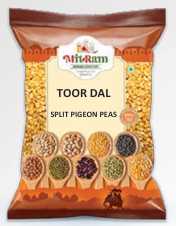
Shop Toor Dal Online
Split pigeon peas in an 800g pack, delivered from a local store — the method, the oiled versus dry difference, and what the pack comes to a serving.
TOOR DAL (DRY) 800GM
$4.01
about $5.01 per kilogram · roughly 15 servings
Sold by Easy Grocery
Price and availability update live from the listing. The description above is the seller's own wording, reproduced as written, and is not endorsed or verified by DoorToShop — read the product page for the pack details and the best-before date.
The Method
The one thing to get right is knowing when to stop. Toor dal is not cooked until it is tender — it is cooked until the grains have collapsed completely and there are no separate pieces left. Everything else is rinsing, water and a tadka.
Rinse it properly first.
Put the dal in a bowl, cover with water, rub it between your hands and pour the cloudy water off. Repeat until the water stays reasonably clear — three or four changes. If your pack is the oiled kind, use warm water for the first rinse or two, because the coating does not come off in cold.
Soak it for half an hour if you have time.
Not essential, and toor dal will cook without it, but half an hour in cold water shortens the cooking noticeably and helps it break down evenly. Drain the soaking water and cook in fresh.
Use about three parts water to one part dal.
By volume, in a pressure cooker. In an open pot start nearer four to one and top up with hot water as it goes, since you will lose more to evaporation. A pinch of turmeric goes in at this stage, along with a few drops of oil if it is prone to foaming over.
Cook until it collapses, not until it is merely soft.
In a pressure cooker that is roughly three or four whistles, or about twelve to fifteen minutes at pressure. In an open pot, forty-five minutes to an hour with the lid ajar, skimming the grey foam off the top in the first few minutes. Toor dal is done when the grains have given up their shape entirely — a dal that still has separate pieces in it is undercooked.
Whisk it, season it, then temper it.
Beat it with a whisk or the back of a ladle until it is smooth, add salt and water to the consistency you want, and simmer another few minutes. The tadka goes on at the very end: hot ghee or oil, cumin or mustard seed, garlic, chilli, poured over the top and stirred in at the table.
General technique, not instructions for a particular pack. Where the packaging gives its own directions, follow those.
What Toor Dal Is
It is split pigeon peas
The whole pea is skinned and split in two, which is why it cooks down in half an hour or so rather than needing an overnight soak like a whole pulse. The split halves are what let it break apart into a purée instead of staying as separate pieces.
Toor, tur, arhar, toovar — all the same
Recipes use whichever name the writer grew up with: toor and tur in western India, arhar in the north, toovar as an older transliteration. If a recipe calls for any of them, this is the pulse it means.
Oiled and unoiled are sold side by side
Some toor dal is coated in a thin film of edible oil, which keeps longer and looks glossier; unoiled dal looks matt and dusty by comparison. Oiled dal needs a warm-water rinse to take the coating off before cooking. Packs do not always say which they are, though this one gives it in the name — check yours, because it changes the first thing you do with it.
It is meant to fall apart
Unlike a lentil you might want to hold its shape in a salad, toor dal is cooked past the point of structure on purpose. That collapse is what makes dal tadka, sambar and the everyday dal that goes with rice — so if it still looks like peas, keep going.
What an 800g Pack Comes To
Roughly 15 servings from the pack, taking a normal portion of dal alongside rice. Worked out from the live listed price — fewer servings if the dal is the centre of the meal, more if it is one of several dishes.
Keeping Dry Pulses
- Decant it into an airtight container rather than leaving it in the opened bag. A clip on a plastic bag is not a seal, and dry pulses keep best sealed.
- Cool, dark and dry. Heat and humidity are what shorten the life of a pulse, and a shelf above the hob is the worst place in the kitchen for it.
- Freeze the pack for a couple of days when it arrives if you have room. Pantry moths get into dry goods at some point in the supply chain rather than in your cupboard, and a spell in the freezer deals with anything that came along for the ride.
- Keep dal away from an already-infested container. If you ever do find moths in a cupboard, everything open in there needs checking, not just the bag you noticed.
- Older dal takes longer to cook. It is still perfectly good — it just wants more time and more water, so if a pack that used to take fifteen minutes now takes twenty-five, that is age rather than a fault.
The freezer trick is worth the two days. Pantry moths get into dry goods somewhere in the supply chain rather than in your kitchen, and a new pack spending its first couple of days in the freezer is the simplest way to make sure nothing spreads to the rest of the cupboard.
Where to Buy It
This pack is listed by Easy Grocery on DoorToShop, alongside the rest of their range — other dals and pulses, atta and rice, whole and ground spices, ghee and cooking oils. Our guide to the store covers what else they stock, and the wider Groceries category has other local stores you can add to the same order.
Check the price per kilo.
Divide the pack price by the weight and compare it against the other sizes on the shelf.
Check whether it is oiled or dry.
It changes how you rinse it. The product name is the first place to look.
Add to cart.
Order from Easy Grocery on DoorToShop. It is a multi-merchant marketplace, so you can add items from other local stores to the same order.
Check out.
Pay securely by card or net banking. There is no minimum order value.
Receive your order.
The store dispatches the next business day and courier delivery typically takes 1–3 business days. Track your order on the web or in the DoorToShop app.
Delivery is $5 as a base fee, with free delivery on orders above $69, and there is no minimum order value. Enter your postcode at checkout to confirm delivery coverage for your address, or read how DoorToShop works.
Frequently Asked Questions: Toor Dal
What is toor dal?
Split pigeon peas — the whole pea skinned and split in two. Splitting is why it cooks in half an hour or so and why it breaks down into a purée rather than staying as separate pieces, which is exactly what dal is supposed to do.
Are toor dal, tur dal and arhar dal the same thing?
Yes. They are regional names and transliterations for the same pulse, along with toovar dal. Toor and tur are common in western India, arhar in the north. If a recipe calls for any of them, this is what it means.
What is the method for cooking toor dal?
Rinse it until the water runs reasonably clear, then cook it with about three parts water to one part dal and a pinch of turmeric. In a pressure cooker that is roughly three or four whistles, or twelve to fifteen minutes at pressure; in an open pot, forty-five minutes to an hour with the lid ajar, skimming the foam early on and topping up with hot water. It is ready when the grains have collapsed completely. Whisk it smooth, add salt and water to the consistency you want, then finish with a tadka of hot ghee or oil with cumin, mustard seed, garlic and chilli.
Do I need to soak toor dal?
No, but half an hour helps. Soaking shortens the cooking time and helps it break down evenly. Drain the soaking water and cook in fresh.
How much water do I use?
About three parts water to one part dal by volume in a pressure cooker, and nearer four to one in an open pot, since more of it evaporates. Top up with hot rather than cold water if it needs more part-way through.
What is oiled toor dal, and how is it different?
Some toor dal is coated with a thin film of edible oil, which helps it keep and gives it a glossy look; unoiled dal looks matt by comparison. Oiled dal wants a rinse in warm water to take the coating off before you cook it, because it does not shift in cold. Check the pack, since not all of them say.
Why is my dal still not soft?
Usually age or hard water. Older dal takes longer and more water — that is normal and it is still fine to eat. Salt added early is often blamed; the bigger factors are how long the pulse has been sitting and how hard your water is. Give it more time and more hot water.
How many servings are in an 800g pack?
Around 15, taking roughly 55g of dry dal per person for a main dal with rice. Fewer if the dal is the centre of the meal, more if it is one of several dishes.
What does the pack work out at?
At the current price of $4.01, that is $5.01 per kilogram, or about $0.27 a serving. Prices move, so check the arithmetic against the price on the product page.
How should I store dry dal?
Airtight, somewhere cool, dark and dry — not on a shelf above the hob. If you have freezer room, a couple of days in the freezer when the pack arrives deals with anything that came along in the supply chain, which is where pantry moths usually originate rather than in your cupboard.
How fast is delivery?
Orders are dispatched by the store the next business day and typically arrive within 1 to 3 business days by courier. Enter your postcode at checkout to confirm delivery coverage for your address.
How much does delivery cost?
The base delivery fee is $5 NZD, with free delivery on orders above $69 — the exact amount is confirmed at checkout. There is no minimum order value.
What if the pack arrives damaged?
Photograph it before opening anything further and contact the store the same day. Returns are handled by the store that sold the item, and nothing in a store's policy limits your rights under the Consumer Guarantees Act 1993.