
Shop Mango Chutney Online

A catering tub delivered from a local store — what separates chutney from pickle and relish, how to keep a large tub once it is open, and what it comes to a spoonful.

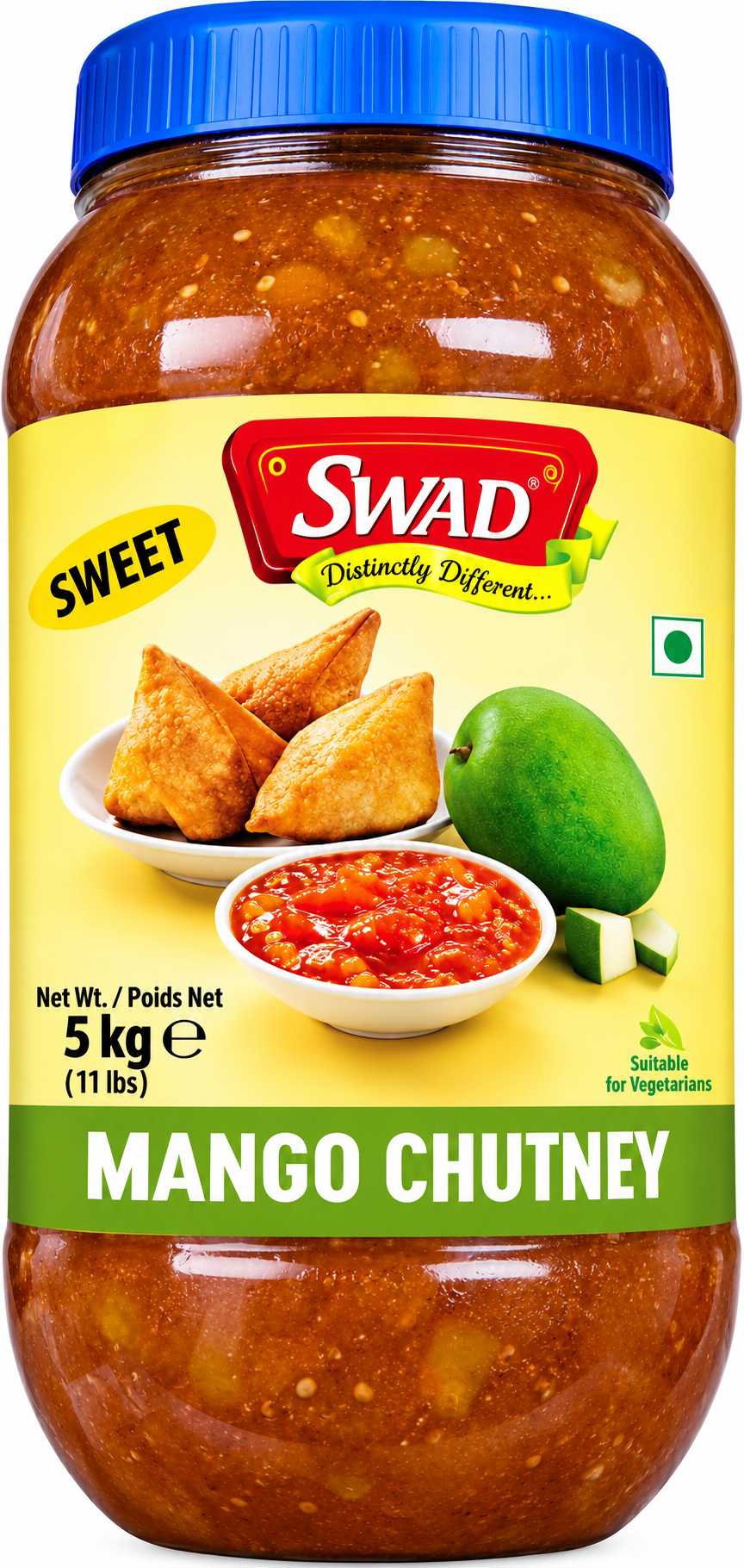
SWAD MANGO CHUTNEY 5KG — sold by Easy Grocery on DoorToShop

SWAD MANGO CHUTNEY 5KG

$26.00 $30.50 Save 15%

about $0.10 a spoonful · roughly 250 in the tub

Sold by Easy Grocery

Swad Mango Chutney 5kg is a sweet and tangy mango condiment made from ripe mangoes and selected spices. Perfect with Indian meals, grilled dishes, snacks, and appetizers.
View product →

Price and availability update live from the listing. The description above is the seller's own wording, reproduced as written, and is not endorsed or verified by DoorToShop. Check the pack weight and the label on the product page before ordering — the listing gives the size in more than one place and the figures do not match, and it does not publish an ingredient or allergen list.

Chutney, Pickle or Relish

Four things get called some version of "chutney" or "pickle" and sit on the same shelf. They are not substitutes for one another, and the one people reach for by mistake is achaar:

Jarred chutney — the sweet-tangy kind

Fruit cooked down with sugar, vinegar and spices until it is thick and glossy. Sweetness and acidity together are what preserve it, which is why an unopened jar keeps at room temperature and why a spoonful goes a long way. This is what a British menu means by mango chutney, and it is what is in this tub.

Achaar — Indian pickle

A different thing entirely: pieces of fruit or vegetable preserved in oil and salt with a lot of spice, sour and hot rather than sweet. Lime achaar and mango achaar sit next to mango chutney on the same shelf and are not substitutes for it. If the jar has a layer of oil on top, it is achaar.

Fresh chutney — the green kind

Coriander, mint, coconut or tomato blitzed raw with chilli and lemon, made in minutes and eaten the same day. No sugar, no cooking, no shelf life. When an Indian recipe says "serve with chutney" it often means this rather than anything from a jar.

Relish and pickle, the British sense

Chopped vegetables in a sweet-sour base — piccalilli, ploughman's pickle, onion relish. Closer to jarred chutney in role than achaar is, and often interchangeable on a cheeseboard, though the flavour goes in a different direction.

Opening a Tub This Size

Sugar and vinegar make chutney a preserve, which is why an unopened tub sits happily in a cupboard. What shortens its life is air and what comes in on the spoon — so the handling matters more than the storage.

1

Decant it into smaller jars on day one.

Do not work out of a five-kilogram tub for months. Wash and thoroughly dry several smaller jars, fill them, and keep one in use while the rest stay sealed. Every time the big tub is opened it is exposed to air and whatever is on the spoon; opening it four times instead of two hundred is the whole trick.

2

Refrigerate after opening.

An unopened tub is stable at room temperature — that is what the sugar and vinegar are for — but once air has been in, the fridge is where it belongs. Follow the storage direction printed on the tub, which overrides anything general said here.

3

Clean, dry spoon. Every time.

Water and food debris are what let mould get started on the surface of a preserve. A spoon that has been in the curry does not go back into the chutney jar.

4

Label the jars with the date you opened them.

A piece of tape and a marker. With a tub this size you will still be working through it in several months, and the one thing you will not remember is when it was opened.

5

Look before you serve.

A preserve that has been kept properly stays good for a long time, but any surface mould, off smell or fermenting fizz means the jar goes out rather than gets scraped. That is a cheap decision with five kilos in reserve.

The packaging has the last word. Storage directions and the best-before date printed on the tub override anything general written here, and the label is also where the ingredient and allergen information lives — the listing does not publish it.

What to Do With It

Poppadoms are where most people stop, which is a waste of five kilograms. Sweet and acidic at the same time makes it more useful than a condiment shelf usually allows:

  • With poppadoms, samosas and pakoras — the standard job, alongside a raita and something sharp.
  • On a cheeseboard. Sweet-tangy chutney against a strong cheddar or a blue is the reason British supermarkets sell mango chutney at all, and it is what makes a ploughman's.
  • In a sandwich. Cheddar and chutney is the classic; it also lifts a leftover-roast sandwich more than any sauce.
  • As a glaze. Thinned with a little water or lemon juice and brushed onto chicken, pork or paneer in the last few minutes of roasting or grilling — the sugar in it caramelises.
  • Stirred into mayonnaise or yoghurt for an instant dip, or into a curry at the end when it needs sweetness and acidity rather than more spice.
  • As a base for coronation-style chicken or a quick marinade, where it does the work of both the sweet and the sour element.

What the Tub Comes To

$26.00 Reduced from $30.50
$5.20 Per kilogram, at the 5kg in the product name
$0.10 Per spoonful, at about 20g

Currently $4.50 off, or 15%. Both figures come straight from the listing, so they are right whether the offer is still running when you read this or not.

Roughly 250 spoonfuls in the tub. The spoonful is the unit anybody actually serves, which is what makes the per-kilogram figure less useful here than it looks.

The per-kilogram figure is worked out from the weight given in the product name. The listing states the pack size in more than one place and the figures do not agree, so confirm the weight on the product page or with the store before you rely on a price comparison.

Where to Buy It

This tub is listed by Easy Grocery on DoorToShop, alongside the rest of their range — pickles and sauces, atta and rice, dals, whole and ground spices, ghee and cooking oils. Our guide to the store covers what else they stock, and the wider Groceries category has other local stores you can add to the same order.

1

Check the pack size on the listing.

The tub is catering-sized. Confirm the weight and read the label before ordering, particularly if you need it for a set number of covers.

2

Make sure you have jars and fridge room.

Most of a tub this size lives in smaller jars once it is open, and at least one of them needs to fit in the fridge.

3

Add to cart.

Order from Easy Grocery on DoorToShop. It is a multi-merchant marketplace, so you can add items from other local stores to the same order.

4

Check out.

Pay securely by card or net banking. There is no minimum order value.

5

Receive your order.

The store dispatches the next business day and courier delivery typically takes 1–3 business days. Track your order on the web or in the DoorToShop app.

Delivery is $5 as a base fee, with free delivery on orders above $69, and there is no minimum order value. Enter your postcode at checkout to confirm delivery coverage for your address, or read how DoorToShop works.

Frequently Asked Questions: Mango Chutney

What is the difference between mango chutney and mango pickle?

Sweetness and what preserves them. Jarred mango chutney is fruit cooked down with sugar and vinegar until thick and glossy — sweet, tangy and mild. Mango achaar, the Indian pickle, is pieces of mango preserved in oil and salt with a great deal of spice: sour, salty and hot rather than sweet. They sit next to each other on the shelf and are not substitutes. A layer of oil on top means you are looking at achaar.

Is jarred chutney the same as the green chutney served in restaurants?

No. Fresh chutney is coriander, mint, coconut or tomato blitzed raw with chilli and lemon, made the same day and kept for a day or two at most. Jarred chutney is cooked, sweetened and preserved. Both are called chutney; they do different jobs on the plate.

Does mango chutney need to be refrigerated?

An unopened jar or tub is stable at room temperature — the sugar and vinegar are what keep it — but once it has been opened it belongs in the fridge. Always follow the storage direction printed on the packaging.

How do I handle a catering-sized tub at home?

Decant it into several smaller jars on the day you open it, keeping one in use and the rest sealed. Opening one big tub repeatedly exposes the whole lot to air and to whatever is on the spoon; opening it a handful of times instead is what keeps the last kilo as good as the first. Use a clean dry spoon, label each jar with the date you opened it, and refrigerate what is in use.

How long does it keep once opened?

Go by the storage direction and the best-before date on the packaging rather than a general figure, and keep it cold, sealed and free of spoons that have been elsewhere. If a jar ever shows surface mould, smells off or seems to be fermenting, throw that jar out rather than scraping it.

What is in it, and does it contain allergens?

The listing does not publish an ingredient list or allergen information. Read the label on the tub, and ask the store before ordering if you need to know in advance — particularly if you are cooking for other people. Formulations vary between brands, so what is in one manufacturer's chutney tells you nothing reliable about another's.

What do you serve mango chutney with?

Poppadoms, samosas and pakoras are the obvious ones. It is equally at home on a cheeseboard against a strong cheddar, in a cheese sandwich, thinned into a glaze for roast or grilled chicken and pork, or stirred into mayonnaise or yoghurt as a quick dip. It also rescues a curry that has come out flat, where it adds sweetness and acidity at once.

How many servings are in the tub?

Roughly 250 at about a 20g tablespoon each, which is a normal condiment portion. That is the figure that makes a catering pack make sense — the unit anyone actually serves is the spoonful.

What does the tub work out at?

At the current price of $26.00, reduced from $30.50 — a saving of $4.50, or 15% — that is about $5.20 per kilogram at the 5kg given in the product name, or roughly $0.10 a spoonful.

How fast is delivery?

Orders are dispatched by the store the next business day and typically arrive within 1 to 3 business days by courier. Enter your postcode at checkout to confirm delivery coverage for your address.

How much does delivery cost?

The base delivery fee is $5 NZD, with free delivery on orders above $69 — the exact amount is confirmed at checkout. There is no minimum order value.

What if the tub arrives damaged or the seal is broken?

Do not open it. Photograph it as it arrived and contact the store the same day. Returns are handled by the store that sold the item, and nothing in a store's policy limits your rights under the Consumer Guarantees Act 1993.

Voice Shopping

Ready to help

Hi there! 👋

I'm your voice shopping assistant. You can:

  • Search for products
  • Add items to cart
  • Check out
  • Track orders

I'm listening continuously! Just speak your command anytime.

Click to speak